Keep Your Greater Boston Chimney Sound from the Crown Down
Your chimney takes more weather than any masonry on the house, exposed on every side to rain, sun, and a Greater Boston freeze-thaw that runs hard for months. On the older homes around here, that shows up as crumbling mortar, spalling brick, a cracked crown, failing flashing, and water that eventually finds its way inside.
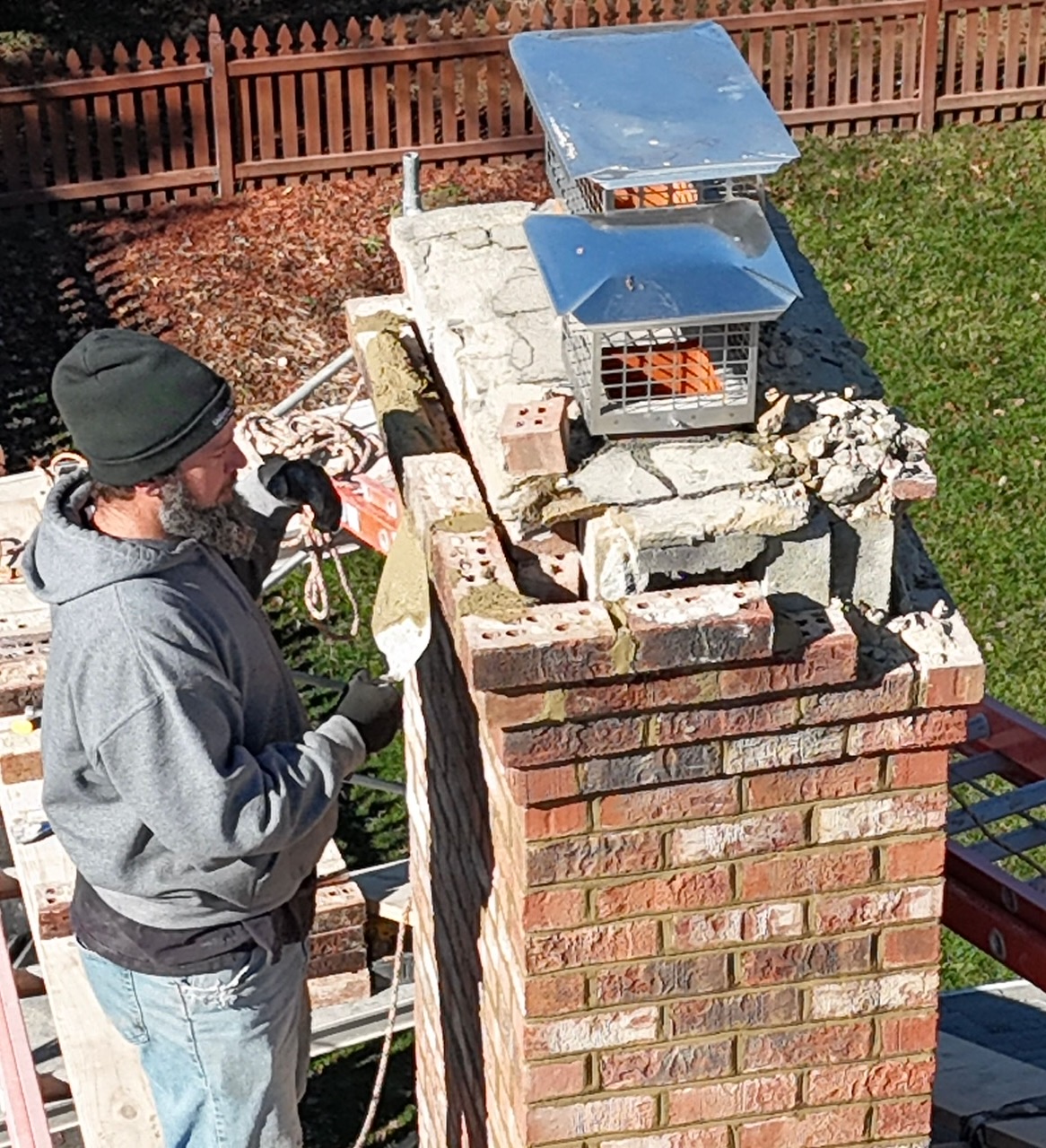
Three Hills Masonry & Foundations handles chimney repair and restoration services across Greater Boston, and we work a chimney the way we work a foundation: as masons. Instead of capping the top or patching the obvious crack, we repoint failed joints, rebuild loose sections, repair the crown and flashing, and match the original brick so the fix lasts and blends in. You get a straight answer on what it needs and what it costs before any work begins. No pressure, no runaround.
Not Sure How Bad the Chimney Is?
We’ll get up there, find what’s actually causing it, and tell you whether it needs work now or just an eye on it. The inspection is free.
What Chimney Repair and Restoration Actually Involves
A chimney fails from the top down. Water gets in through a cracked crown or worn-out flashing, soaks into the brick and mortar below, and freeze-thaw does the rest, popping the face off the brick and washing out the joints until the stack starts to lean. What the repair takes depends on how far it’s gone. Caught early, it’s often repointing the failed mortar joints and resealing the crown. Left longer, restoration means rebuilding the crown, replacing spalled brick, repairing flashing, and waterproofing the masonry so it sheds water instead of holding it. When the top courses have shifted or pulled apart, a partial or full rebuild puts the structure back the way it was built, matched to the original brick.
Most of it traces back to water, which is why we find where it’s getting in before we touch a brick. Fix the cause, not just the crack, and the chimney holds.
What Fixing the Chimney Now Saves You Later
Nobody thinks about the chimney until water’s coming through the ceiling. Staying ahead of it is the difference between a quick repair and a full rebuild.
- Keeps a small repair small. Repointing a few joints or resealing a crown now costs a fraction of rebuilding a leaning stack later.
- Stops water before it reaches the house. A sound crown and tight flashing keep leaks from staining ceilings and rotting the framing around the chimney.
- Takes a hazard off your roof. Spalling brick and failed mortar can drop pieces or let the stack lean, and a stable chimney puts that risk to rest.
- Clears it off the inspection report. A documented chimney repair keeps a crumbling stack from stalling a home sale or knocking money off your offer.
Done by a mason, the work is matched to the original brick so it blends in instead of getting patched over. The catch is catching it early, which comes down to knowing what to look for.
Catch It Before It Becomes a Rebuild
Signs Your Chimney Needs Repair or Restoration
The most common signs a chimney needs repair are crumbling mortar, spalling brick, a cracked crown, white staining, water showing up inside, and any lean to the stack. Spot one and it’s worth a look. Here’s what each one means:
Crumbling or Missing Mortar
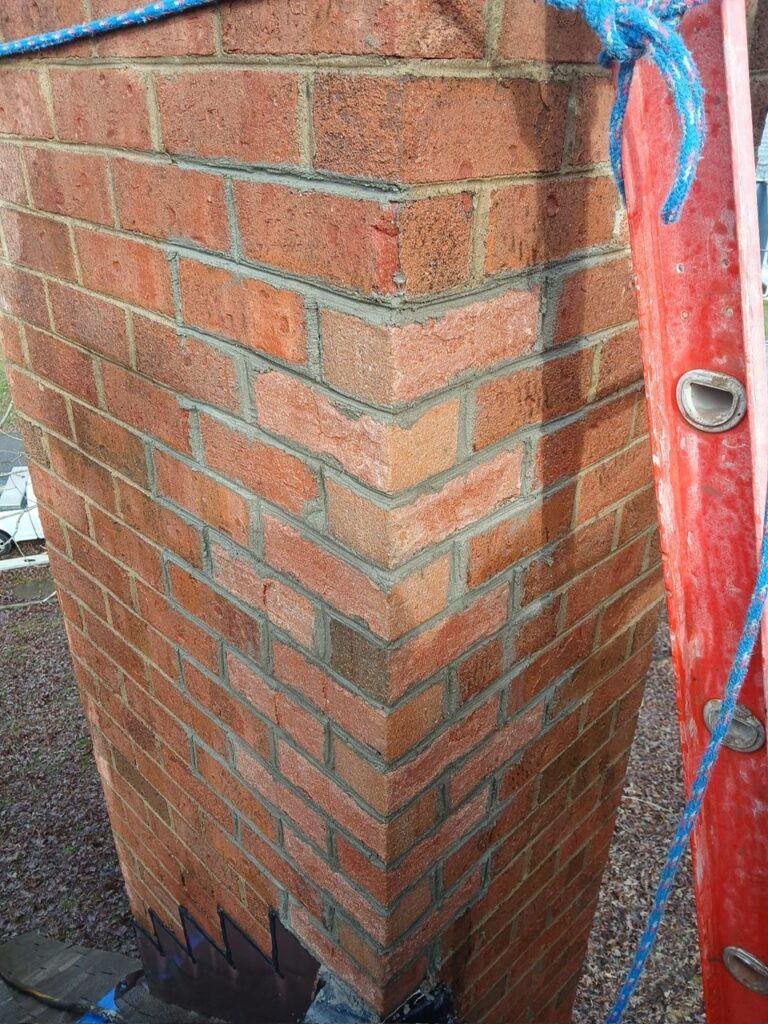
Mortar is the first thing to go on an old chimney. Once the joints turn to sand or wash out, water runs straight through the gaps and the brick loses its grip, which is what chimney repointing, also called tuckpointing, is built to fix before the stack starts to move.
Spalling or Flaking Brick
This is freeze-thaw at work. Water soaks into the brick, freezes, expands, and blows the outer face clean off, leaving brick that’s pitted, crumbling, and dropping flakes onto the roof. Spalling brick can’t be sealed back together; the damaged units have to be cut out and replaced, and on an older home that means matching the original brick so the repair disappears into the wall.
A Cracked Chimney Crown
The crown is the sloped concrete slab that caps the top of the chimney and sheds rain away from the brick. When it cracks, water funnels straight down into the masonry, so a chimney crown repair often stops a leak you’d otherwise be chasing for years.
White Staining on the Brick
That chalky white bloom, called efflorescence, is mineral salt left behind as water passes through the brick and dries. It’s a quiet sign the chimney is taking on water and could use waterproofing.
Water Stains Around the Chimney Inside
Brown rings on the ceiling or damp drywall near the chimney almost always start at the roofline, where cracked crowns and failed flashing let water in. By the time it surfaces inside, the chimney flashing repair or crown work it points to is usually overdue.
A Chimney That Leans or Pulls Away
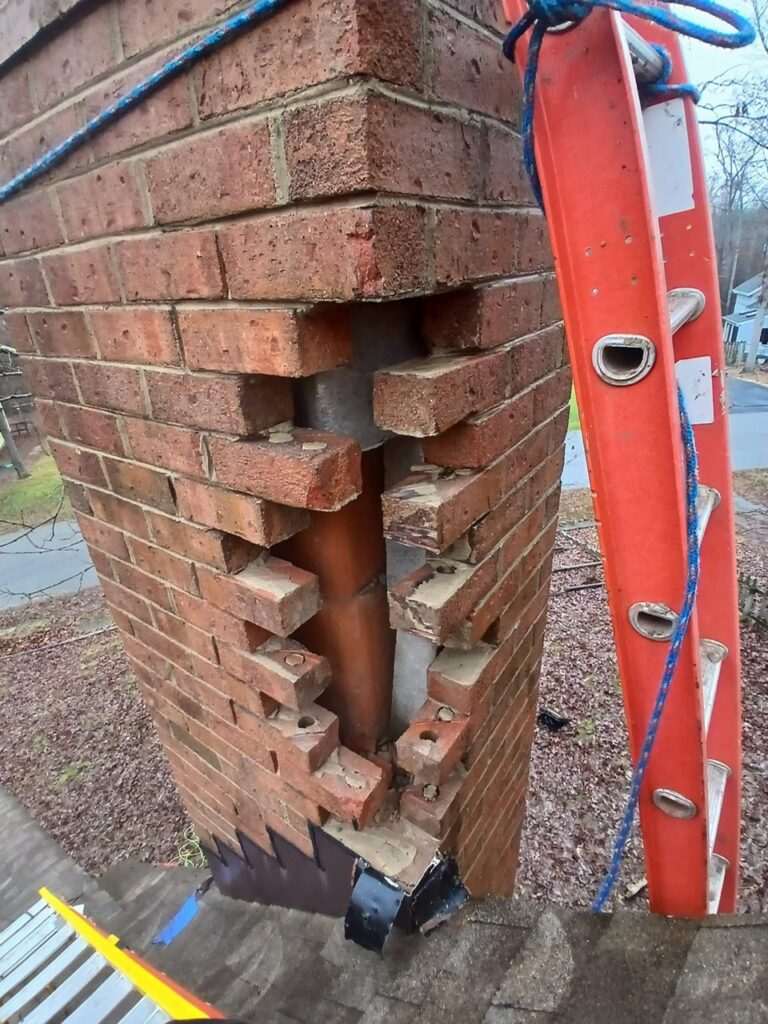
This one doesn’t wait. A stack that tilts or opens a gap where it meets the house has structurally shifted, and it’s both a safety risk and a sign you’re likely looking at a partial or full chimney rebuild.
If you spot one of these, then it’s worth a look. Spot two or three together and it’s worth a call, because they usually share one cause, and that cause only gets more expensive the longer it sits.
How a Chimney Gets Repaired
The right repair depends on what’s actually wrong up top. Repointing a few joints and rebuilding a leaning stack are nothing alike, so a real fix starts by pinning down the problem before anyone reaches for a method. Here’s what a mason works with on a chimney, and where each one fits.
| Method | What It Does | Best For |
|---|---|---|
| Repointing (Tuckpointing) | Cuts out failed mortar and packs the joints with fresh, matched mortar | Crumbling, sandy, or washed-out joints |
| Brick Replacement | Removes spalled or cracked brick and sets in replacements matched to the original | Brick that’s flaking, pitted, or broken |
| Crown Repair or Rebuild | Patches or recasts the concrete cap on top of the chimney | Cracked, chipped, or crumbling crowns |
| Flashing Repair | Reseals or replaces the metal where the chimney meets the roof | Leaks at the roofline |
| Waterproofing | Applies a breathable sealer that keeps water out but lets the masonry dry | Brick taking on water or showing efflorescence |
| Partial or Full Rebuild | Takes the chimney down to a sound point and rebuilds it, matched to the original | Leaning, separated, or structurally failed stacks |
Most of these come back to one thing: water working into the masonry. That’s the same force that goes after a foundation, which is why chimney work and foundation repair so often trace back to the same source. The detail that makes or breaks any of it is the mortar, which has to be mixed softer than the brick, or the brick face spalls off under the load. Matching the mortar to the original is as much a part of the job as the repair itself.
From Consultation to Last Brick
Working with us is straightforward. Here’s how a chimney repair goes, start to finish.
- Reach Out: Call or send a few photos of what you’re seeing, and we’ll get you on the schedule for a look.
- On-Site Estimate: We get up to the chimney, find what’s actually driving the damage, whether it’s a cracked crown, failed flashing, or mortar that’s washed out, and hand you a clear written price. The look is free.
- Lock in a Date: Approve the quote and we set a date that works around your calendar, not just ours.
- Repair and Clean Up: The crew does the work from start to finish, keeps you posted as it goes, and leaves the roof and the ground around the house clean when it’s done.
No salesman, no subcontractor you’ve never met, and no surprise number at the end. The same crew that quotes your chimney is the one up on the roof repairing it, the price you approve is the price you pay, and every repair is built to outlast the next round of New England winters. That’s the difference between a chimney that’s been patched and one that’s actually fixed.
Who You’re Hiring for the Chimney
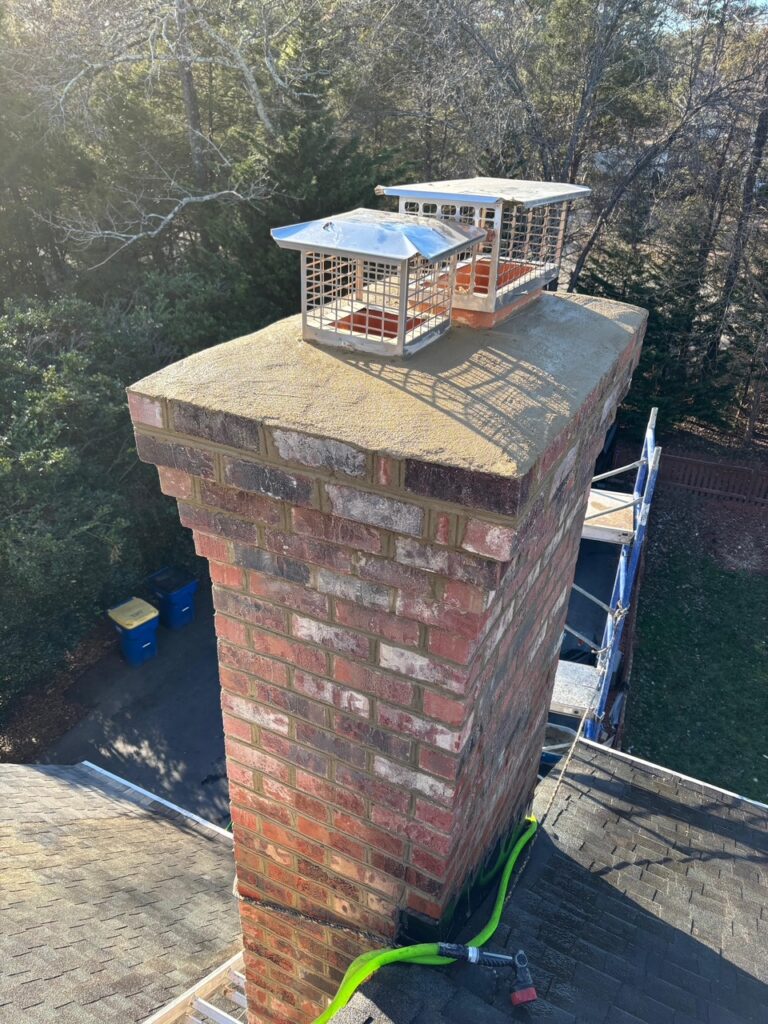
Most companies that show up for a chimney are sweeps or roofers who patch the obvious problem and move on. Three Hills Masonry & Foundations is a masonry company, so we treat a chimney as what it is, a brick-and-mortar structure that has to carry its own weight and shed water for decades. That’s why our chimney repair and restoration services start with the masonry itself, not a quick seal over the top.
You also get the owner. He grew up in the trade and runs his own crew on every job, so the person who quotes your chimney is the one repointing the joints and matching the brick once the work starts.
The work stands behind itself, too. Three Hills is a registered, insured Home Improvement Contractor (HIC #219738), every chimney repair carries a 25-year guarantee, and the estimate is always free. You get a clean site, a straight explanation of what your chimney needs, and a fix built to last. No pressure, no runaround.
Cross the Chimney Off Your List
Chimney Repair & Restoration Across Greater Boston
Three Hills repairs chimneys throughout Greater Boston and the surrounding towns, from the older homes in the inner neighborhoods out through the South Shore. That covers Boston, Charlestown, Cambridge, Chelsea, Somerville, and Allston, along with Quincy, Dedham, Norwood, Westwood, Canton, Randolph, Braintree, Weymouth, and Hingham.
The chimneys on these homes tend to share one history: decades of New England freeze-thaw working at brick and mortar that was laid long before anyone thought to waterproof it. That’s exactly the kind of chimney repair we’re built for. Don’t see your town listed? Reach out anyway, there’s a good chance that we cover it.
Chimney Repair & Restoration FAQs
How do I know if my chimney needs repair?
If you can see crumbling mortar, spalling or flaking brick, a cracked crown, white staining, or water showing up near the chimney inside, it needs a look. Those are all signs water is already getting into the masonry, and on an older home it spreads fast once it starts. A free inspection tells you how far it’s gone.
Can a chimney be repaired, or does it need to be rebuilt?
Usually it can be repaired. Most chimneys only need repointing, a new crown, or a few replaced bricks rather than a full rebuild. A rebuild only comes into play when the stack is leaning, separating from the house, or has lost too much brick to stand on its own. We’ll tell you which one you’re looking at after we see it.
How much does chimney repair cost?
There’s no flat rate. The cost depends on what’s failing, how high up it is, and how much of the chimney is involved, and sealing a crown is a different job than rebuilding the top three feet of brick. The only honest number comes from an in-person look, which is always free.
What’s the difference between chimney repair and chimney restoration?
Repair fixes a specific problem, like repointing failed joints or patching a cracked crown. Restoration is the bigger job of bringing a worn or historic chimney back to sound condition, often combining repointing, brick replacement, crown work, and waterproofing. Most jobs are repairs; restoration is for chimneys that have gone too long without attention.
Why does my chimney leak when it rains?
Almost always a cracked crown or failed flashing. The crown is the cap on top and the flashing seals the seam where the chimney meets the roof, so once either one fails, rain runs straight into the masonry and shows up as stains inside. The fix is sealing or rebuilding the crown, repairing the flashing, and waterproofing the brick so it stops soaking up water.
Are you licensed and insured, and is the work guaranteed?
Yes. Three Hills is a registered, insured Home Improvement Contractor, and every chimney repair carries a 25-year guarantee. Estimates are always free.
How do I know if my chimney needs repair?
If you can see crumbling mortar, spalling or flaking brick, a cracked crown, white staining, or water showing up near the chimney inside, it needs a look. Those are all signs water is already getting into the masonry, and on an older home it spreads fast once it starts. A free inspection tells you how far it’s gone.
Can a chimney be repaired, or does it need to be rebuilt?
Usually it can be repaired. Most chimneys only need repointing, a new crown, or a few replaced bricks rather than a full rebuild. A rebuild only comes into play when the stack is leaning, separating from the house, or has lost too much brick to stand on its own. We’ll tell you which one you’re looking at after we see it.
How much does chimney repair cost?
There’s no flat rate. The cost depends on what’s failing, how high up it is, and how much of the chimney is involved, and sealing a crown is a different job than rebuilding the top three feet of brick. The only honest number comes from an in-person look, which is always free.
What’s the difference between chimney repair and chimney restoration?
Repair fixes a specific problem, like repointing failed joints or patching a cracked crown. Restoration is the bigger job of bringing a worn or historic chimney back to sound condition, often combining repointing, brick replacement, crown work, and waterproofing. Most jobs are repairs; restoration is for chimneys that have gone too long without attention.
Why does my chimney leak when it rains?
Almost always a cracked crown or failed flashing. The crown is the cap on top and the flashing seals the seam where the chimney meets the roof, so once either one fails, rain runs straight into the masonry and shows up as stains inside. The fix is sealing or rebuilding the crown, repairing the flashing, and waterproofing the brick so it stops soaking up water.
Are you licensed and insured, and is the work guaranteed?
Yes. Three Hills is a registered, insured Home Improvement Contractor, and every chimney repair carries a 25-year guarantee. Estimates are always free.
Get a Straight Answer on Your Chimney
A chimney problem only gets bigger and pricier with every freeze. A cracked crown or a few open joints today is a leaning stack and a leaking ceiling a couple of winters from now, and the longer it sits, the more brick it takes to put right.
A free inspection from Three Hills tells you exactly what your chimney needs and what it costs, with no pressure to move forward. If something’s going on up top, let’s get a look at it before the next storm finds it.