
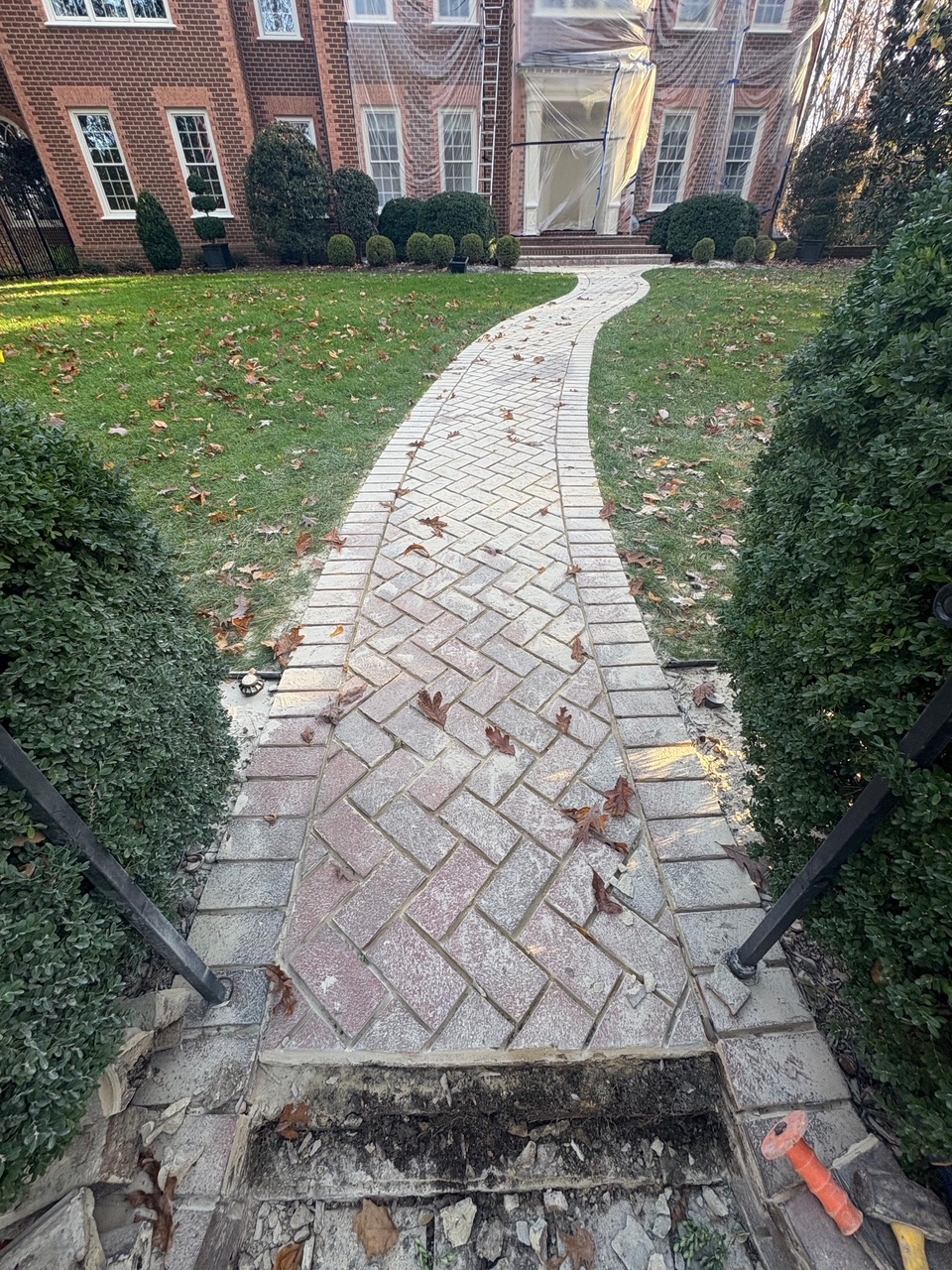
Greater Boston Walkways Built From the Base Up
Your walkway is the first stretch of your home anyone really sees, and it takes the worst of a New England year: daily foot traffic, freeze-thaw, road salt, and water pooling where the grading runs wrong. On older homes, that turns into a sunken section, a stone that rocks underfoot, or a cracked slab that’s one winter from a trip hazard.
Three Hills Masonry & Foundations builds and repairs walkways across Greater Boston as masons, not as a seasonal landscaping add-on. A walkway that sinks or cracks is almost always riding on a base that shifts or water that keeps collecting, the same forces that go after a foundation, so we fix what’s moving underneath before we set a stone on top. Brick, bluestone, granite, or pavers, new or repaired, the base is what decides how long it holds. We come out, tell you straight what it needs and what it costs, then do the work. No pressure, no runaround.
New Walkway, or Fixing the One You’ve Got?
We come out, look at what you’re working with, and tell you straight whether it’s a repair or a fresh build, and what each one runs. The visit is free.
How Is a Walkway Installed?
A walkway is installed by excavating to a proper depth, building and compacting a base that drains, then setting the brick, stone, or pavers on top with tight, sealed joints. The base is the part that matters most. A walkway that cracks, sinks, or shifts is almost always riding on a base that has settled or a spot where water keeps collecting, not on the surface you can see.
Repairing an existing walkway follows the same logic. Resetting heaved stones, repointing washed-out joints, or rebuilding a sunken section only holds if the base and the drainage underneath get corrected first. New front path or a fix to the one you’ve got, the work starts with a look at the grade, the drainage, and what the walkway is sitting on, because that’s what decides what it actually needs.
What You Get From a Walkway Done Right
Done right, a walkway pays off in more than looks. Because the work corrects the base and the drainage instead of just the surface, the benefits hold up season after season rather than cracking back by spring.
Sure Footing, Winter Included
A path that heaves, wobbles, or hides a cracked edge turns a walk to the door into a fall risk, and it’s the kids and older relatives who use the front walk most. A walkway built to pitch and drain water off the surface ices over far less, which is where most winter slips start. Level it, bed it solid, and grade it right, and the safest path becomes the one you stop thinking about.
The Entrance That Sets the Tone
Your walkway is the approach to the entire home, so a clean, level path tells a visitor the place is cared for before they reach the door. A cracked or sunken one does the opposite, no matter how sharp everything behind it looks.
A Lift to Resale Value
Curb appeal is one of the first things a buyer and an appraiser size up, and a sound, finished walkway reads as upkeep rather than a repair waiting to happen.
Fixed Once, Not Every Spring
When the base and the drainage get corrected instead of just the surface, the path stops slipping into the patch-it-again cycle every thaw. Pay once for the cause and the work holds through the New England winters that wreck a surface-only fix.
A Walkway That Matches the Rest of the House
On an older home, new brick, bluestone, or granite is matched to the existing masonry so the walkway looks original, not like a fresh strip dropped in. And since a front walk usually meets the steps and stairs at the door, tying the two together keeps the entrance reading as one piece instead of a patchwork of separate fixes.
All of it comes down to two things: a base built to last and the right material on top. That second choice is worth a closer look.
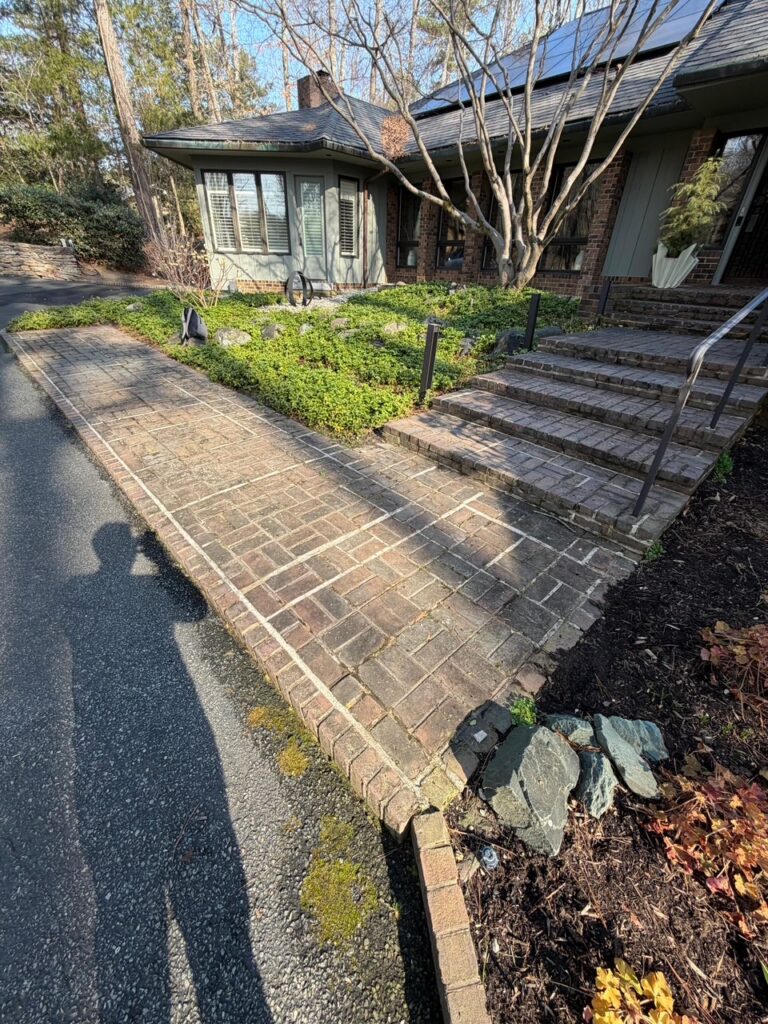
Get a Straight Answer on Your Walkway
How Does a Walkway Project Work?
A walkway project runs the same five steps from first call to finished path:
- Reach out. Call or send a few photos and details, and we get you on the schedule for a look.
- On-site estimate. We come out, check the grade and what the path is sitting on, and hand you a clear written price. The visit is free.
- Schedule the work. Approve the estimate and we lock in a date that fits your calendar.
- Build it. Our crew sets the base and the stone from start to finish and keeps you posted along the way.
- Clean up. We leave the site clean and the walkway ready to use the day we pack up.
Same crew start to finish, a price you approve before we begin, and no surprise number at the end.
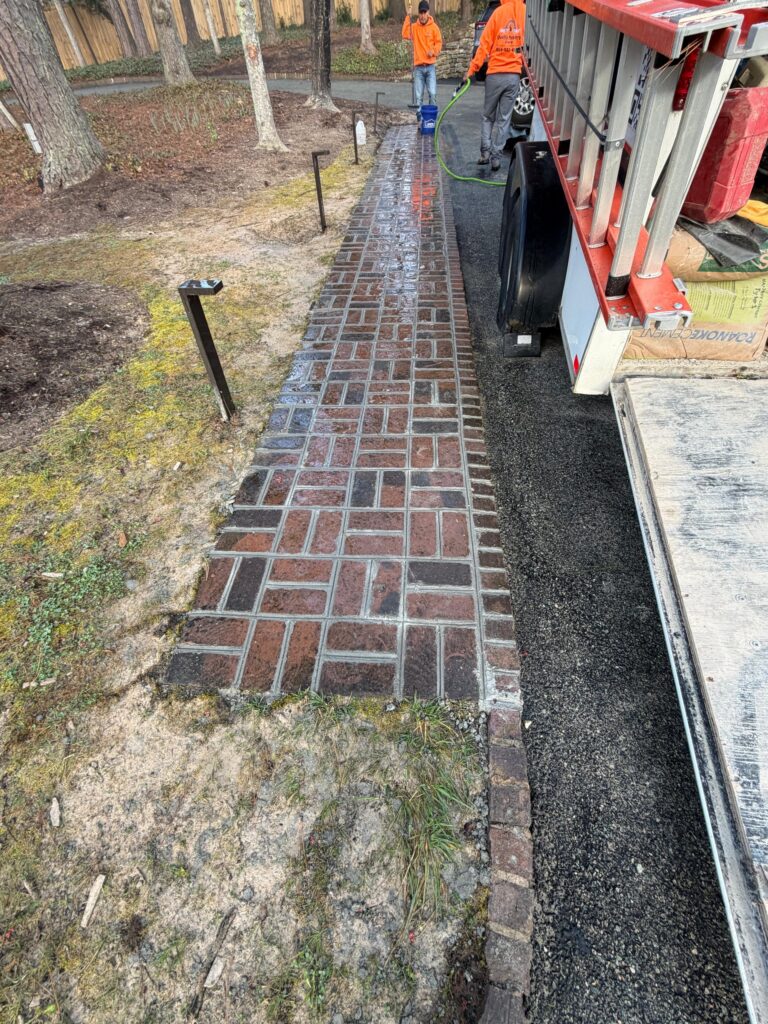
Why Is My Walkway Sinking, Cracking, or Shifting?
A walkway sinks, cracks, or shifts for one main reason: water and a base that moved underneath it. Here is what the most common signs usually point to, and what it typically takes to fix them.
| What You’re Seeing | What It Usually Means | Typical Fix |
|---|---|---|
| A sunken or low section | The base settled or washed out underneath | Rebuild and re-compact that section of base, then reset the surface |
| Cracked or heaved stones | Freeze-thaw and water working under the surface | Reset on a corrected, draining base and replace the broken units |
| Stones or pavers that rock underfoot | Lost bedding or washed-out joints | Re-bed the units and refresh the jointing |
| Sandy or missing joints | Water running through where the sand or mortar gave out | Repoint or re-sand the joints to close the path for water |
| Water pooling or ice in the same spot | Grading or drainage sending water the wrong way | Regrade and correct the drainage so water sheds off |
These are the usual patterns, but the only way to know what is actually going on under a specific walkway is to look, which is why every job starts with an on-site read.
A New Walkway That Fits the Home
Not every walkway call is a repair. Plenty of homeowners are building from scratch: finishing a new entrance, replacing a path that’s past saving, or running a fresh walk from the driveway to the door or out to a patio. A new walkway is a chance to fix the layout, not just the surface, so the path follows how people actually move to the house instead of cutting an awkward line across the yard.
The details that make a new walkway look right are the same ones that make it last. On an older home, the brick or stone gets matched to the existing masonry and the front steps so the walk reads as part of the house, not a strip dropped in later. The width, the edges, and the way it meets the steps and the driveway decide how the whole entrance flows. And underneath all of it, the base and the drainage are built the same way on a new walk as on a repair, because a brand-new path on a weak base ends up right back where the old one was.
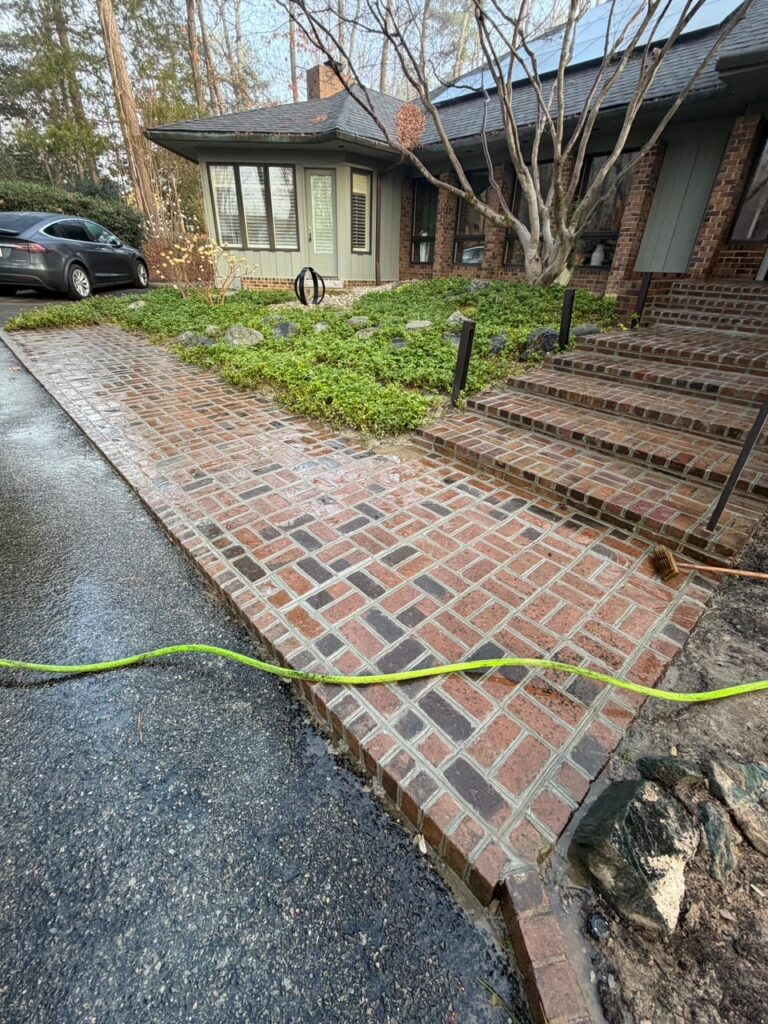
Why Greater Boston Homeowners Trust Three Hills With Their Walkways
Most walkways in Greater Boston get set by landscapers who level the stone for the season and move on. Three Hills is a masonry and foundation company, so a walkway gets the same base-and-drainage work that goes into a foundation, built to shed water and stay put through the freeze-thaw winters that will heave a surface-only path out of the ground.
You also get the owner, who runs his own crew on every job, so the person who prices your walkway is the one setting the stone. Three Hills is a registered, insured Home Improvement Contractor (HIC #219738), every job carries a 25-year guarantee, and the estimate is always free. No pressure, no runaround.
Your Walkway Could Be the Next One We Build
Walkways Across Greater Boston
Three Hills builds and repairs walkways across Greater Boston and the surrounding towns, from the inner neighborhoods out through the South Shore. That covers Boston, Charlestown, Cambridge, Chelsea, Somerville, and Allston, along with Quincy, Dedham, Norwood, Westwood, Canton, Randolph, Braintree, Weymouth, and Hingham.
The homes across these towns share the same story: older masonry, hard freeze-thaw winters, and front walks that have taken decades of foot traffic, salt, and standing water. That’s exactly the kind of walkway work we’re built for. Don’t see your town listed? Reach out anyway, there’s a good chance you’re still in range.
If your walk is anywhere in Greater Boston and it’s started to sink, crack, or just show its age, point us to it.
Greater Boston Walkway FAQs
How much does a walkway cost?
There's no flat rate for a walkway. The cost depends on the size, the material, and how much base and drainage work the site needs, so a quick repair and a full new walk on a rebuilt base are worlds apart on price. The only honest number comes from a free on-site estimate.
Can a walkway be repaired, or does it need to be replaced?
Usually it can be repaired. Most walkways just need stones reset, joints repointed, or a settled section rebuilt on a corrected base rather than a full replacement. A complete rebuild only makes sense when the base has failed across the whole run or the surface is too far gone to reset. We'll tell you which one you're looking at after we see it.
What's the best walkway material for Greater Boston winters?
For Greater Boston's freeze-thaw and road salt, granite is the most durable underfoot, with bluestone close behind for a more finished look. Brick suits older and historic homes and can be repaired one unit at a time, and pavers are a versatile, repairable option. On an older home the material often picks itself, since matching the existing stone matters as much as the material. The right choice comes down to the look, the traffic, and the budget.
How long does a masonry walkway last?
Built on a solid base, a masonry walkway lasts decades. Granite and stone hold up the longest, while brick and pavers last a good long while with minor upkeep like refreshing the joint sand. Every walkway Three Hills builds is backed by a 25-year guarantee, and the base and the drainage decide how long it lasts more than the surface material does.
How long does a walkway take to install?
Anywhere from a day to several, depending on the size and how much base work it needs. A small repair or a short straight walk is often a one-day job, while a larger run or a full rebuild on a new base takes longer. You'll get a realistic timeline with your estimate before any work starts.
How much does a walkway cost?
There’s no flat rate for a walkway. The cost depends on the size, the material, and how much base and drainage work the site needs, so a quick repair and a full new walk on a rebuilt base are worlds apart on price. The only honest number comes from a free on-site estimate.
Can a walkway be repaired, or does it need to be replaced?
Usually it can be repaired. Most walkways just need stones reset, joints repointed, or a settled section rebuilt on a corrected base rather than a full replacement. A complete rebuild only makes sense when the base has failed across the whole run or the surface is too far gone to reset. We’ll tell you which one you’re looking at after we see it.
What’s the best walkway material for Greater Boston winters?
For Greater Boston’s freeze-thaw and road salt, granite is the most durable underfoot, with bluestone close behind for a more finished look. Brick suits older and historic homes and can be repaired one unit at a time, and pavers are a versatile, repairable option. On an older home the material often picks itself, since matching the existing stone matters as much as the material. The right choice comes down to the look, the traffic, and the budget.
How long does a masonry walkway last?
Built on a solid base, a masonry walkway lasts decades. Granite and stone hold up the longest, while brick and pavers last a good long while with minor upkeep like refreshing the joint sand. Every walkway Three Hills builds is backed by a 25-year guarantee, and the base and the drainage decide how long it lasts more than the surface material does.
How long does a walkway take to install?
Anywhere from a day to several, depending on the size and how much base work it needs. A small repair or a short straight walk is often a one-day job, while a larger run or a full rebuild on a new base takes longer. You’ll get a realistic timeline with your estimate before any work starts.
Build It Once, Walk It for Decades
Whether you’re planning a brand-new walk or watching the old one crack and settle, the work only gets simpler the sooner you have it looked at. A walkway problem won’t fix itself, and a New England winter pushes a small repair toward a full rebuild every freeze.
A free on-site visit from Three Hills Masonry & Foundations tells you exactly what your walkway needs, what it will cost, and whether it’s a repair or a new build, with no pressure to move forward. If something out front is cracking, sinking, or just ready for an upgrade, let’s take a look before the next freeze gets to it.