

Steps and Stairs That Stay Solid Underfoot in Greater Boston
Your front steps are the most-used masonry on the house, and the most exposed. Every day they carry foot traffic; every winter they take freeze-thaw, road salt, and standing water at the base. On older Greater Boston homes, that surfaces as a cracked tread, a stone that rocks underfoot, a sinking corner, or mortar washing out between the bricks. Catch it late and a quick fix turns into a rebuild, and a loose step turns into a fall.
Three Hills Masonry & Foundations handles masonry steps and stairs as masons, not as a hardscaping add-on. Settling steps and a settling foundation share the same causes, water, frost, and a base that has shifted, so we fix what is moving below the stone before we reset it on top. Whether your steps need a granite repair, a rebuilt brick stoop, or a brand-new stone stairway, the work starts the same way: a straight read on the problem and an honest number before anything begins. No pressure, no runaround.
Not Sure If It’s a Repair or a Rebuild?
We come out, look at the steps, and tell you straight whether they need a full rebuild or just a fix, and what each one runs. The visit is free.
Good Steps and Stairs Start at the Base
Masonry step work runs from resetting one loose tread to tearing out a sunken set and rebuilding it. Either way it starts below the surface, because a step that cracks, leans, or pulls from the house is usually riding on a base that has settled or a spot where water keeps pooling. Reset the stone without fixing that and it moves again within a season.
Done right, steps and stairs work means rebuilding the base, swapping cracked or spalled treads, repointing the joints, and correcting the drainage that let the water sit. The stone you see is only as good as the base you don’t. New build or old repair, in granite, bluestone, brick, or concrete, that base is what makes it last, the same way it does in foundation repair.
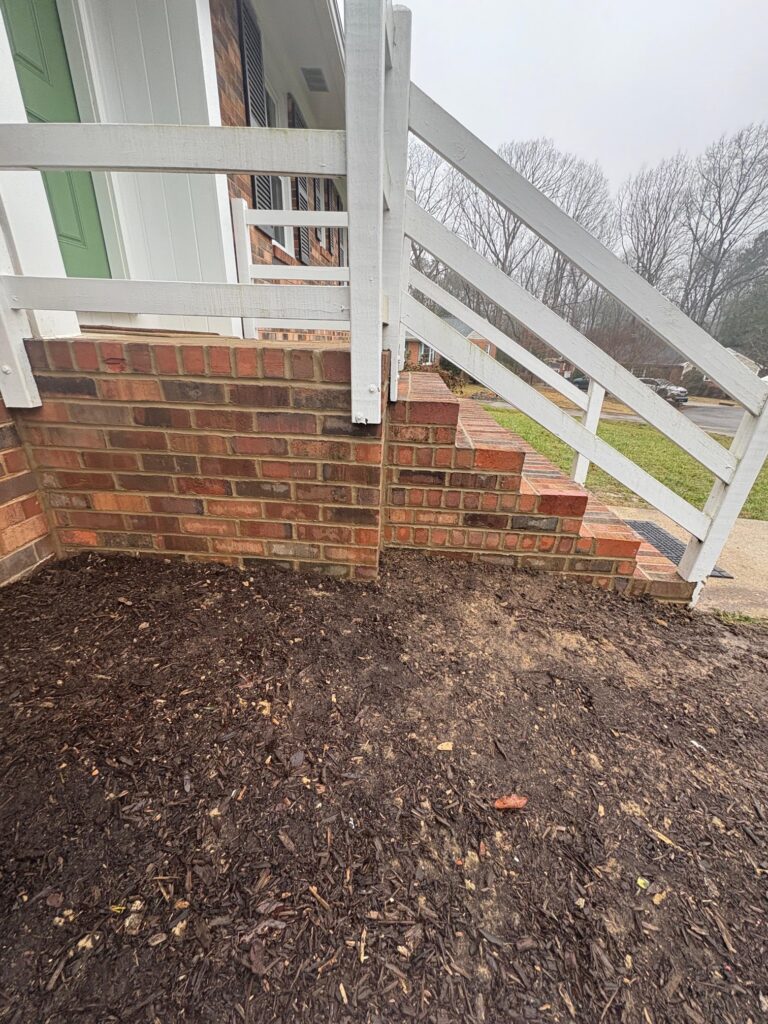
What Solid Steps Do for Your Home
Good steps do more than look sharp. Fixed at the base, they take the daily risk and the long-term cost off the table, and they reset the first thing anyone sees walking up to the house.
Footing You Can Trust
A step that wobbles, pitches, or hides a cracked nose is how a routine trip to the door becomes a fall, and the people most at risk, kids and older relatives, use the front steps the most. Level treads, solid risers, and a surface that sheds water instead of icing over put that risk to rest. It is the kind of benefit you stop thinking about the day the work is done.
A Front Entrance That Pulls Its Weight
The steps and stoop are the first thing a guest, a delivery driver, or a buyer sees, and a clean, level entrance reads as a house that has been kept up.
One Repair Instead of Three
Because the base and the drainage get corrected, not just the surface, the steps break the slow cycle of patch, crack, patch again. Pay once for the cause and the fix outlasts the next decade of New England winters.
One Entrance, Not a Patchwork
On an older home, new granite or brick gets matched to the existing stonework so the repair disappears instead of standing out as a fresh patch. And because the steps usually meet a path, tying them into a walkway or a stone landing keeps the whole entrance reading as one deliberate piece rather than a row of mismatched fixes.
Fix the base and the steps deliver all of it at once: safer to use, sharper out front, and built to hold.
One Small Fix Now Beats a Full Rebuild Later
Signs Your Steps Are Starting to Go
Steps and stairs rarely fail overnight. They warn you first: a cracked tread, a wobble underfoot, mortar turning to sand, a corner that has started to settle, or water that won’t drain off. Read the signs early and you are looking at a repair, not a rebuild.
- Cracked or Chipped Treads: The flat part you step on takes the most wear and the most standing water, so a hairline crack widens fast once freeze-thaw gets into it. A chipped front edge, the nose, turns into a trip point.
- A Step That Rocks Underfoot: A tread or stone that shifts when you put weight on it has lost its bed or its mortar, which makes it both a fall risk and a sign the base beneath it is moving.
- Crumbling or Missing Mortar: When the joints between brick or stone turn to sand or wash out, water runs straight in and the units start to come loose.
- A Sinking Corner, or Steps Pulling Away From the House: One side dropping, or a gap opening where the steps meet the house, means the base underneath has settled. This is the sign that points to a structural cause rather than simple surface wear.
- Spalling or Flaking Brick: Water soaks into the brick, freezes, and pops the face right off, leaving it pitted and shedding flakes. Spalled brick can’t be sealed back together, so the damaged units have to be cut out and replaced.
- Water Pooling On or Around the Steps: Puddles that linger after rain, or ice that forms in the same spot every winter, mean the steps or the grading aren’t shedding water. That standing water drives most of the damage above it.
None of it fixes itself, and New England winters only speed it up. Most failing steps and stairs trace back to a single cause, usually water or a base that has settled, which is why catching it early keeps a front-step repair from becoming a full stoop rebuild.
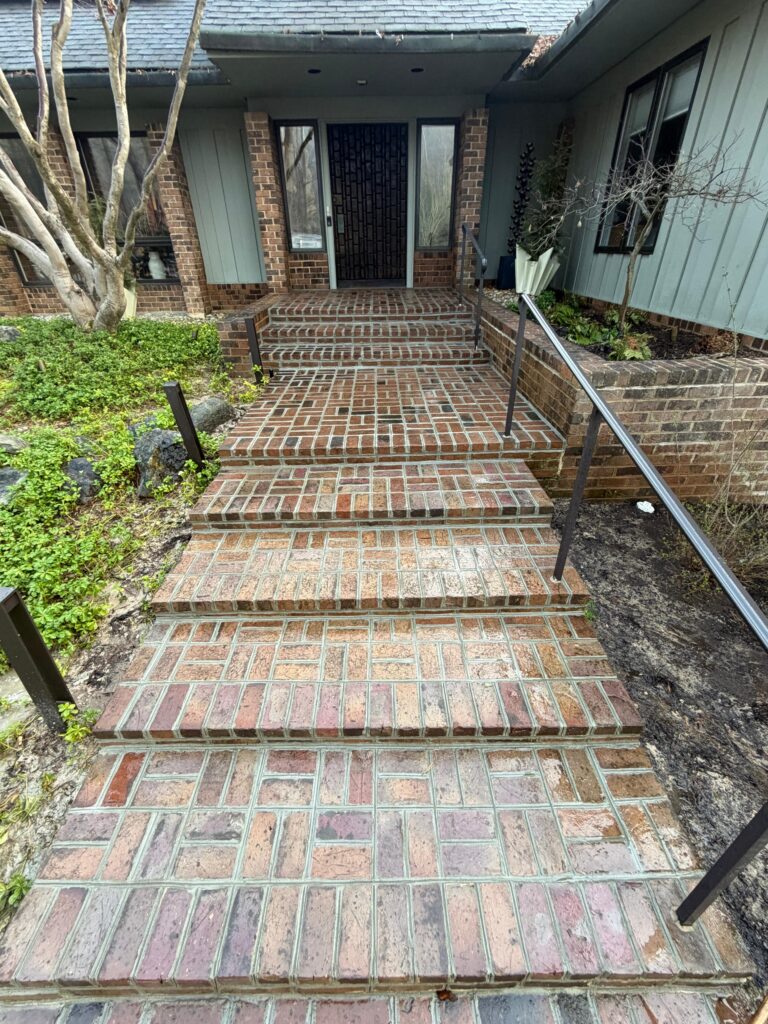
Granite, Bluestone, Brick, or Concrete?
The right material comes down to the look you are after, the traffic the steps take, and the budget. Here is how the common ones stack up for Greater Boston homes.
| Material | What Stands Out | Best For |
|---|---|---|
| Granite | Toughest option there is. Solid treads shrug off salt and freeze-thaw for generations. | High-traffic front steps built to last |
| Bluestone | Clean blue-gray stone with a refined, flat finish. | Landings and a more polished entrance |
| Brick | Classic New England look, repairable one unit at a time. | Historic and older homes that should match |
| Concrete | Budget-friendly and durable once properly poured and sealed. | Simple steps where cost leads |
| Fieldstone | Rugged and natural, no two stones alike. | Rustic looks and existing stonework to match |
On an older home the material usually picks itself: match what is already there so the new steps and stairs vanish into the original stonework. On a new build it comes down to the look you want and what holds up best for the traffic and the budget.
How Your Steps and Stairs Project Goes, Start to Finish
Hiring someone to redo the front steps shouldn’t feel like a gamble. Three Hills runs every masonry steps project on the same straightforward track, and the crew that prices the work is the crew that builds it, so nothing gets handed off to a subcontractor you have never met.
From the first call to the last stone set, you get a clear price before anything starts, a date that works around your calendar, and a clean site when it is done. No surprise number at the end, and no guesswork about what your steps need. Here is how it goes:
- Get in touch
- On-site estimate
- Schedule a date
- Build the stairs
- Clean up the area
Same crew start to finish, a price you approve before we begin, and steps ready to use the day we pack up.
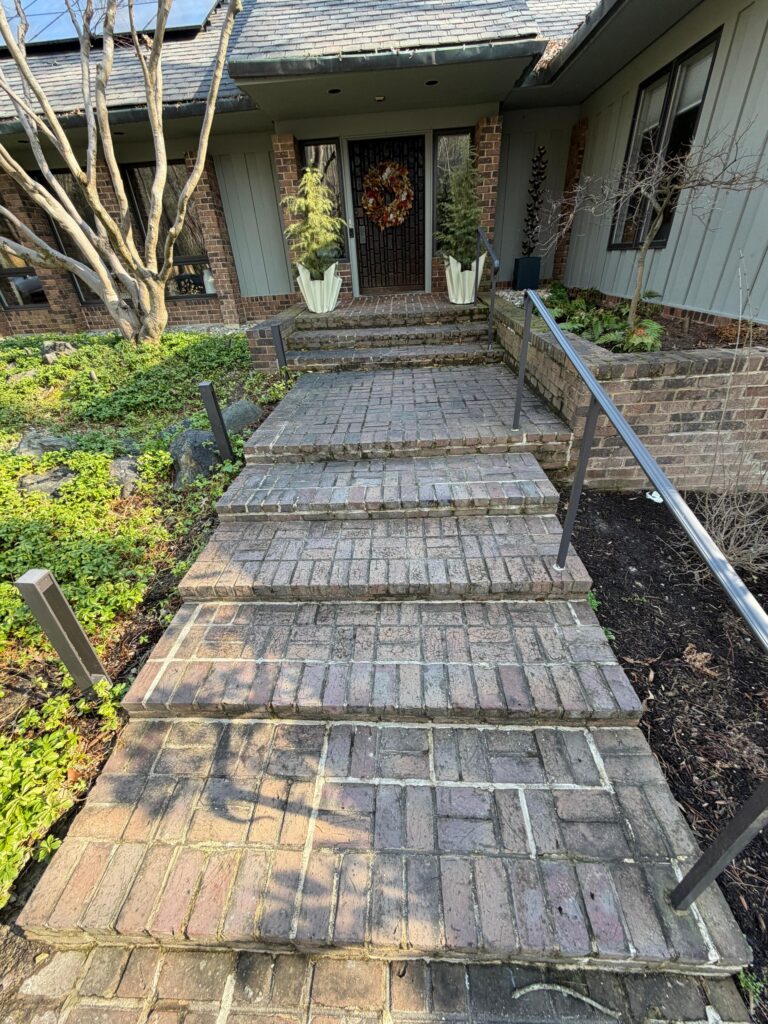
Built by Masons, Not a Landscape Crew
Most outfits that build steps are landscapers or hardscapers who set the stone, level it for the season, and move on. Three Hills Masonry & Foundations is a masonry and foundation company, so the steps get a base built to carry the load and shed water, the same drainage thinking that goes into foundation waterproofing on a wet basement.
The owner runs his own crew on every job, which means the person who prices your steps is the one setting the last stone, not a salesman up front and a crew of strangers behind him. The work is backed by a 25-year guarantee, every estimate is free, and Three Hills is a registered, insured Home Improvement Contractor (HIC #219738). You get a clean site, a straight answer on what your steps need, and a price you approve before anyone starts. No pressure, no runaround.
Your Steps Could Be the Next Set We Build
Steps and Stairs Across Greater Boston
Three Hills builds and repairs steps and stairs across Greater Boston and the surrounding towns, from the inner neighborhoods out through the South Shore. That covers Boston, Charlestown, Cambridge, Chelsea, Somerville, and Allston, along with Quincy, Dedham, Norwood, Westwood, Canton, Randolph, Braintree, Weymouth, and Hingham.
The homes across these towns share the same story: older masonry, hard freeze-thaw winters, and front steps that have taken decades of salt and weather. That is the kind of step and stair work we are built for. Not listed but close by? Ask anyway. There is a good chance you are still in range.
Steps and Stairs FAQs
How much does it cost to repair or replace masonry steps?
There is no flat rate. The cost depends on the material, the size of the steps, and how much of the base needs work, so resetting a loose tread and rebuilding a settled set are worlds apart on price. The only honest number comes from a free on-site look.
Can my steps be repaired, or do they need to be rebuilt?
Usually they can be repaired. Most steps only need treads reset, mortar repointed, or a few units swapped out, the same masonry work behind everything else we build. A full rebuild is for when the base has failed or the set has badly settled.
What is the best material for front steps in New England?
For New England’s freeze-thaw and road salt, granite is the most durable, with bluestone close behind for a more finished look. Brick suits historic and older homes and repairs one unit at a time, while concrete is the budget option when it is poured and sealed right. The best choice comes down to your home’s style, the traffic, and the budget.
Why do my steps crack, sink, or pull away from the house?
It almost always traces back to water and a base that has shifted. Freeze-thaw, road salt, and poor drainage work on the footing under the steps until it settles, and the cracking, sinking, and pulling away follow. It is the same force that goes after a foundation.
How long do masonry steps last?
Built on a solid base, masonry steps last decades. Granite and stone can run fifty years or more, and brick or concrete hold up a good long while with minor upkeep. The base and the drainage decide it.
What is the difference between granite and bluestone steps?
Granite is the denser, harder stone, nearly indestructible underfoot and the most resistant to salt and weather, which makes it the go-to for treads. Bluestone is a flat, blue-gray stone with a cleaner, more refined finish, often used for landings and a polished look. Many entrances use both.
How much does it cost to repair or replace masonry steps?
There is no flat rate. The cost depends on the material, the size of the steps, and how much of the base needs work, so resetting a loose tread and rebuilding a settled set are worlds apart on price. The only honest number comes from a free on-site look.
Can my steps be repaired, or do they need to be rebuilt?
Usually they can be repaired. Most steps only need treads reset, mortar repointed, or a few units swapped out, the same masonry work behind everything else we build. A full rebuild is for when the base has failed or the set has badly settled.
What is the best material for front steps in New England?
For New England’s freeze-thaw and road salt, granite is the most durable, with bluestone close behind for a more finished look. Brick suits historic and older homes and repairs one unit at a time, while concrete is the budget option when it is poured and sealed right. The best choice comes down to your home’s style, the traffic, and the budget.
Why do my steps crack, sink, or pull away from the house?
It almost always traces back to water and a base that has shifted. Freeze-thaw, road salt, and poor drainage work on the footing under the steps until it settles, and the cracking, sinking, and pulling away follow. It is the same force that goes after a foundation.
How long do masonry steps last?
Built on a solid base, masonry steps last decades. Granite and stone can run fifty years or more, and brick or concrete hold up a good long while with minor upkeep. The base and the drainage decide it.
What is the difference between granite and bluestone steps?
Granite is the denser, harder stone, nearly indestructible underfoot and the most resistant to salt and weather, which makes it the go-to for treads. Bluestone is a flat, blue-gray stone with a cleaner, more refined finish, often used for landings and a polished look. Many entrances use both.
Let’s Make Your Steps Solid Again
Steps don’t fix themselves, and a New England winter only pushes a small crack toward a full rebuild. The sooner you have them looked at, the smaller the job tends to be, and the sooner the front of your house is safe and squared away again.
A free on-site visit from Three Hills Masonry & Foundations tells you exactly what your steps need and what it costs, with no pressure to move forward. If something is cracking, wobbling, or sinking out front, let’s take a look before the next freeze gets to it.