Keep Water Out of Your Foundation, Across Greater Boston
Damp patches creeping up a basement wall, a musty smell that won’t quit, water trailing across the floor after a hard rain. In Greater Boston, that water almost always starts on the outside of the foundation, where freeze-thaw winters, heavy spring rains, and dense New England soil press moisture straight against the stone, brick, and block your house sits on.
Three Hills Masonry & Foundations handles foundation waterproofing for homeowners across the Greater Boston area, and we do it the way a mason does, from the outside, where the water actually gets in. Plenty of waterproofing crews install an interior system that manages water once it’s already in your basement. We work the foundation itself, sealing and protecting the masonry so the water has nowhere to enter in the first place. Every job starts the same way: we come out, find where the water’s getting in, and give you a straight answer on what it takes to keep it out. No pressure, no runaround.
Not Sure Where the Water’s Getting In?
A site visit tells you whether it’s a foundation issue, where it starts, and what it takes to stop it. No cost, no obligation.
What Goes Into Waterproofing a Foundation
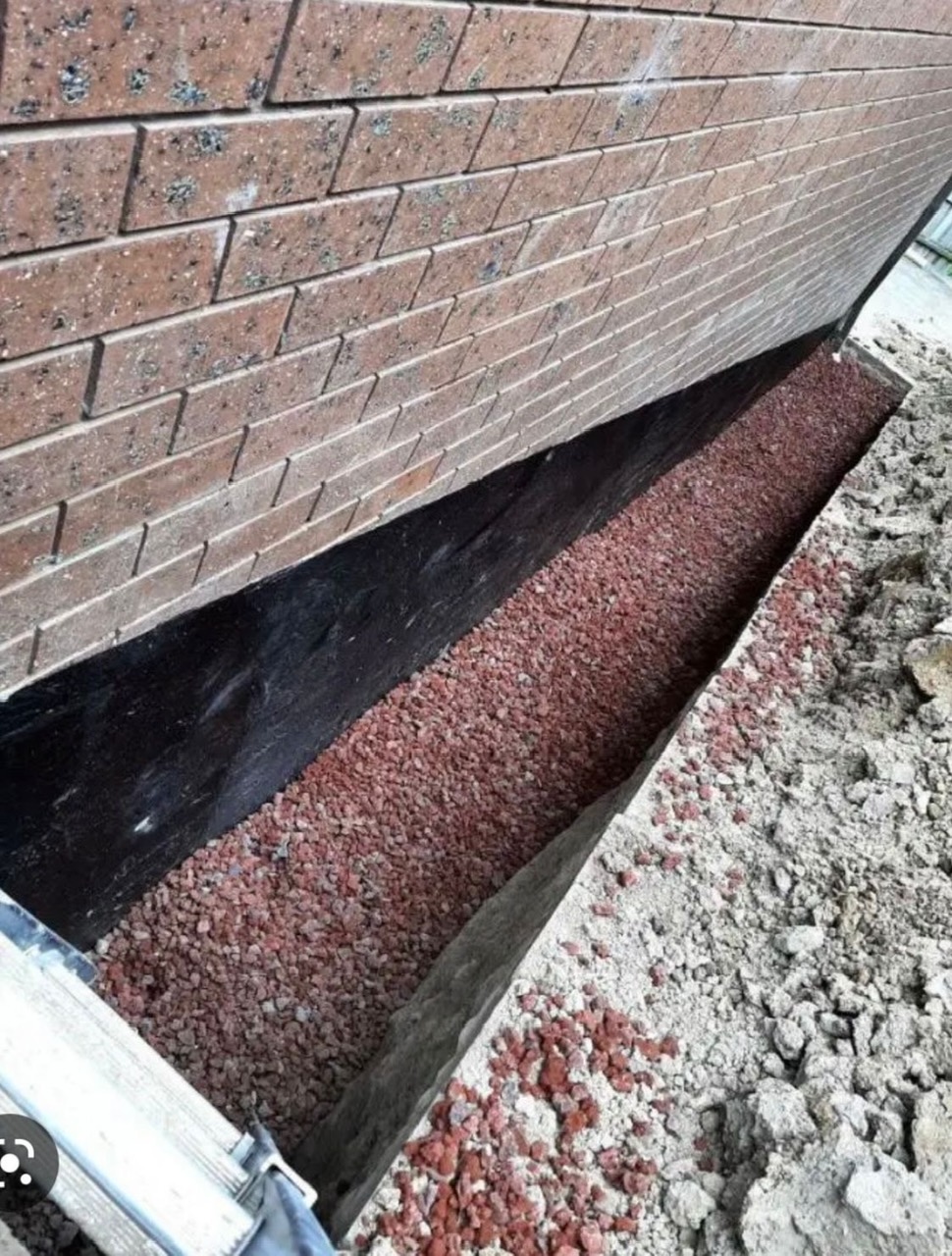
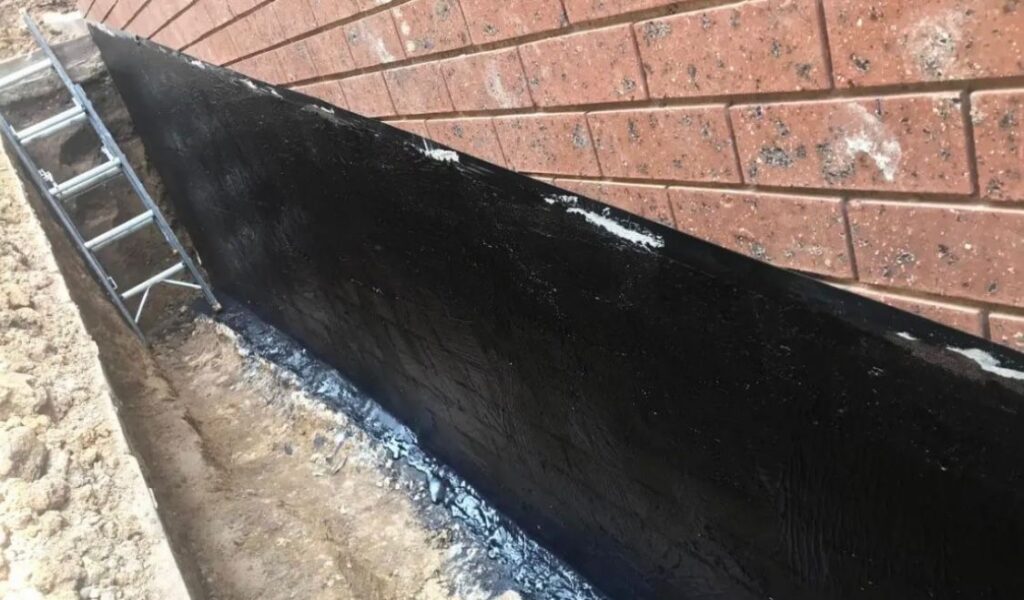
Foundation waterproofing stops water before it can pass through your foundation walls and into the home. It’s an exterior approach: instead of collecting water once it’s already inside and pumping it back out, the work treats the foundation itself so moisture can’t move through the stone, brick, or block in the first place.
Across Greater Boston, where the ground stays wet for much of the year and freeze-thaw cycles work small gaps into the masonry, that outside-in protection is what keeps a basement dry over the long haul. What the work involves depends on the foundation and where the water is getting in. Exterior waterproofing usually includes some mix of sealing or coating the foundation wall, parging the masonry to give it a smooth, water-shedding surface, repointing failed mortar joints so water stops slipping through them, sealing active cracks, and correcting the drainage and grading around the house so water moves away from the foundation instead of pooling against it. On a stone or fieldstone foundation, that masonry work matters even more, because the joints between the stones are where water tends to find its way through.
Most homeowners reach out after they’ve already seen the signs: a musty basement, walls that stay damp, a chalky white film on the masonry, or water that shows up every time it rains hard. Others get ahead of it before finishing a basement or listing a home. Whatever the trigger, the work starts with finding the source, because water in a basement rarely comes from where it shows up, so the first step is always tracing it back to where it’s getting in.
Is Foundation Waterproofing Worth It?
Yes. Water is the leading cause of foundation damage, so waterproofing the foundation from the outside prevents the cracking, mold, and masonry decay that water sets off, and it protects your home’s value along the way. Stopping water early is far easier than repairing the damage it causes once it takes hold.
Stops Damage Before It Reaches the Structure
As it collects against the wall, the pressure widens cracks, washes out mortar, and pushes a foundation toward movement and settling. Stopping it at the source heads off the cracking and shifting that later calls for foundation repair.
Keeps the Basement Dry and the Air Healthy
A wet basement breeds mold and that musty smell that drifts through the whole house. Keeping water out protects your air quality and turns the space back into something you can actually use.
Protects the Masonry Itself
Constant moisture eats away at mortar and weakens stone and brick, and freeze-thaw winters speed it up. Waterproofing the masonry from the outside protects the material your foundation depends on, so it holds for decades.
Protects Your Home’s Value
A dry, sound foundation is one of the first things a buyer or home inspector checks. Documented waterproofing protects resale value and clears a major red flag before it ever comes up.
Find Out What’s Letting Water In
Signs Your Foundation Needs Waterproofing
If your basement shows any of these signs, water is already finding its way through your foundation, and it’s worth having it looked at before the damage spreads.
- Damp or Discolored Basement Walls: Wet patches, dark staining, or walls that feel cool and damp to the touch mean water is moving through the masonry, even if you never catch it pooling.
- White Chalky Residue: That powdery white film on stone or brick, called efflorescence, is the mineral salt left behind as water passes through the masonry and evaporates. It’s one of the clearest signs water is getting in.
- A Musty, Earthy Smell: Persistent basement odor is usually mold and mildew feeding on moisture, and it often shows up before any water is visible.
- Water or Seepage After Heavy Rain: Puddles, trickling along the floor, or wet spots that appear during a storm point to water entering through the foundation walls or the seam where the wall meets the floor.
- Cracks That Stay Wet or Weep: Hairline cracks are common, but any crack that lets water through, stays damp, or widens over time is a direct path for moisture inside.
- Constant Dampness or Humidity: A basement that always feels clammy, fogs up windows, or rusts stored metal is holding more moisture than it should.
None of these signs fix themselves, and most get worse with the next wet season. Catching water early usually means a simpler fix, while a basement left wet long enough can turn a waterproofing job into a structural one. If any of this sounds like your home, the next step is finding where the water is getting in and stopping it.
How Foundation Waterproofing Works
There’s no single way to waterproof a foundation. The right approach depends on what the foundation is made of and where the water is getting in, which is why the work starts with finding the source rather than defaulting to one product. These are the main methods used to keep water out from the outside.
| Method | What It Does | Best For |
|---|---|---|
| Exterior Sealing or Coating | Applies a water-resistant barrier to the outside of the foundation wall so moisture can’t pass through the surface | Walls letting water seep through the masonry |
| Parging | Coats rough stone or block with a smooth cement layer that sheds water away from the wall | Uneven stone, fieldstone, or block foundations |
| Water-Tight Repointing | Replaces failed mortar joints with fresh mortar so water stops getting through the gaps | Stone and brick foundations with crumbling or missing mortar |
| Crack Sealing | Seals active cracks in the wall to close off a direct path for water | Foundations with leaking or weeping cracks |
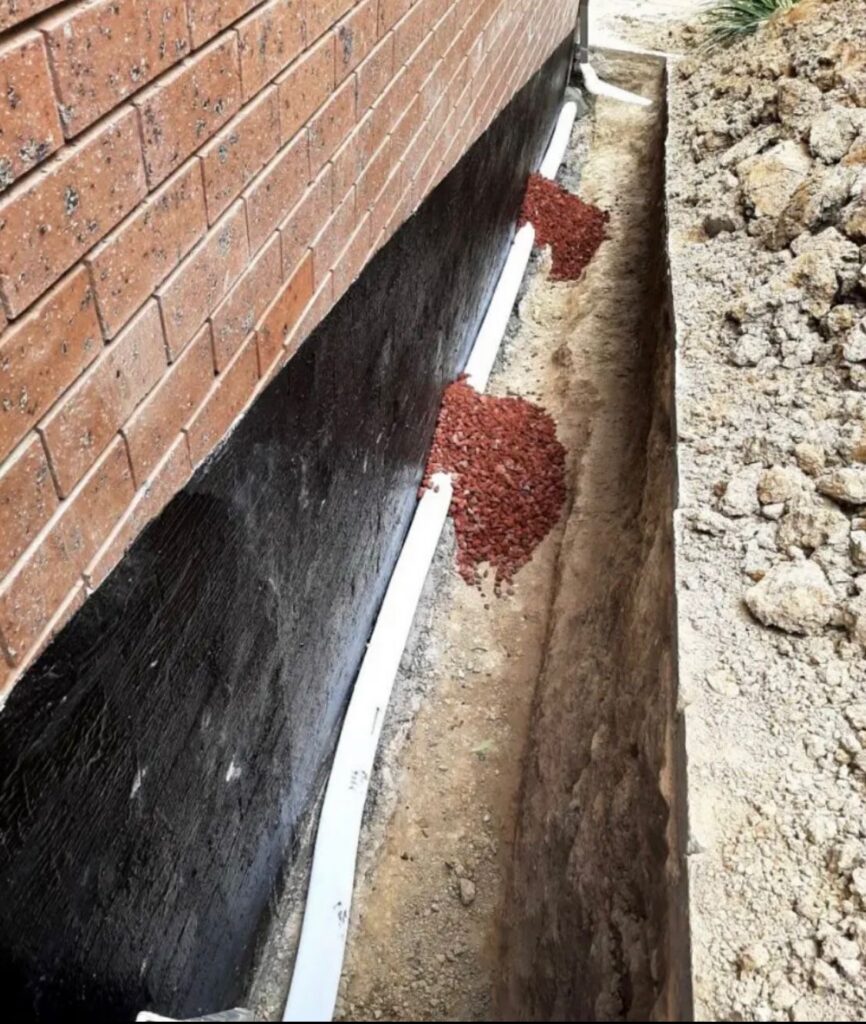
| Drainage and Grading | Redirects water away from the house through footing drains, regrading, and downspout management | Homes where water pools against the foundation |
What your foundation is made of shapes the approach:
- Stone and Fieldstone Foundations: repointing and parging the irregular joints where water finds its way through.
- Brick Foundations: repointing plus exterior sealing to close off the mortar paths.
- Concrete Block Foundations: exterior coating and drainage to stop moisture wicking through the seams.
- Poured Concrete Foundations: sealing cracks and tie-holes, plus exterior drainage.
Every one of these comes down to working the masonry itself, the craftsmanship behind everything Three Hills does.
What to Expect, Start to Finish
Every waterproofing job runs the same straightforward way:
- Find the Source. We come out, look at where the water’s getting in, and figure out what’s actually causing it, since water rarely starts where it shows up.
- Get a Clear Quote. You get a straight breakdown of what your foundation needs and what it costs, before any work begins.
- Do the Work. Our crew handles the waterproofing from start to finish and leaves the site clean.
- Make Sure It Holds. We check the work and stand behind it, so the basement stays dry.
No guesswork and no surprises, just the same crew, a clear quote, and a foundation that keeps water out.
Why Greater Boston Property Owners Choose Three Hills
Most waterproofing outfits in Greater Boston are built around interior systems or franchise products. Three Hills is a masonry company first, which means we treat the foundation the way it was built and stop the water at the wall instead of managing it after it’s already inside. The owner runs the same crew on every job from start to finish, so the person who quotes your foundation is the one who stands behind the work.
That work is backed by a 25-year guarantee, and Three Hills Masonry & Foundations is a registered Home Improvement Contractor (HIC #219738), fully insured, with free estimates on every job. You get a clean site, a clear explanation at each step, and a straight answer on what your foundation needs. No pressure, no runaround.
Join Your Greater Boston Neighbors
Serving Greater Boston and the Surrounding Towns
Three Hills handles foundation waterproofing across Greater Boston, from the inner neighborhoods out through the South Shore. We work in Boston, Cambridge, Somerville, Charlestown, Chelsea, and Allston, then head south into Quincy, Dedham, Canton, Braintree, Weymouth, and Hingham.
Homes across these towns run into the same trouble: dense clay and ledge soil that traps water against the foundation, wet springs, and freeze-thaw winters that drive moisture into the masonry. That’s why Greater Boston foundation waterproofing is never one-size-fits-all, and why we match the approach to your foundation and your lot. Don’t see your town? Reach out, we likely cover it.
Foundation Waterproofing FAQs
How do I know if I need foundation waterproofing?
If your basement has damp walls, a musty smell, white efflorescence on the masonry, or water after heavy rain, water is already getting through the foundation and waterproofing is worth looking into. A site visit confirms where it’s entering and how serious it is.
What’s the difference between foundation waterproofing and basement waterproofing?
Foundation waterproofing stops water at the wall from the outside, while basement waterproofing usually manages water after it’s already inside, often with an interior drainage system. As masons, Three Hills works the foundation itself so the water doesn’t get in to begin with.
Can you waterproof a stone or fieldstone foundation?
Yes. Stone and fieldstone foundations are common across Greater Boston, and waterproofing them comes down to repointing and parging the masonry so water stops traveling through the joints between the stones. It’s exactly the kind of work a masonry company is built for.
How much does foundation waterproofing cost?
There’s no flat rate. The cost depends on the foundation, where the water is coming from, and how much work the wall needs, which is why we start with a free on-site estimate and give you a clear number before any work begins.
Does the work come with a guarantee?
Yes. Three Hills backs its foundation waterproofing with a 25-year guarantee, and the company is a registered, insured Home Improvement Contractor (HIC #219738).
How do I know if I need foundation waterproofing?
If your basement has damp walls, a musty smell, white efflorescence on the masonry, or water after heavy rain, water is already getting through the foundation and waterproofing is worth looking into. A site visit confirms where it’s entering and how serious it is.
What’s the difference between foundation waterproofing and basement waterproofing?
Foundation waterproofing stops water at the wall from the outside, while basement waterproofing usually manages water after it’s already inside, often with an interior drainage system. As masons, Three Hills works the foundation itself so the water doesn’t get in to begin with.
Can you waterproof a stone or fieldstone foundation?
Yes. Stone and fieldstone foundations are common across Greater Boston, and waterproofing them comes down to repointing and parging the masonry so water stops traveling through the joints between the stones. It’s exactly the kind of work a masonry company is built for.
How much does foundation waterproofing cost?
There’s no flat rate. The cost depends on the foundation, where the water is coming from, and how much work the wall needs, which is why we start with a free on-site estimate and give you a clear number before any work begins.
Does the work come with a guarantee?
Yes. Three Hills backs its foundation waterproofing with a 25-year guarantee, and the company is a registered, insured Home Improvement Contractor (HIC #219738).
Keep Water Out of Your Foundation for Good
Water problems don’t wait, and they don’t get cheaper to fix. The sooner you find out where the water’s getting in, the simpler the repair and the less it threatens the rest of your home. A free inspection from Three Hills tells you exactly what your foundation needs, with a clear quote and no pressure to move forward.
If your basement has been damp, musty, or taking on water, let’s take a look and get it handled before the next storm.