
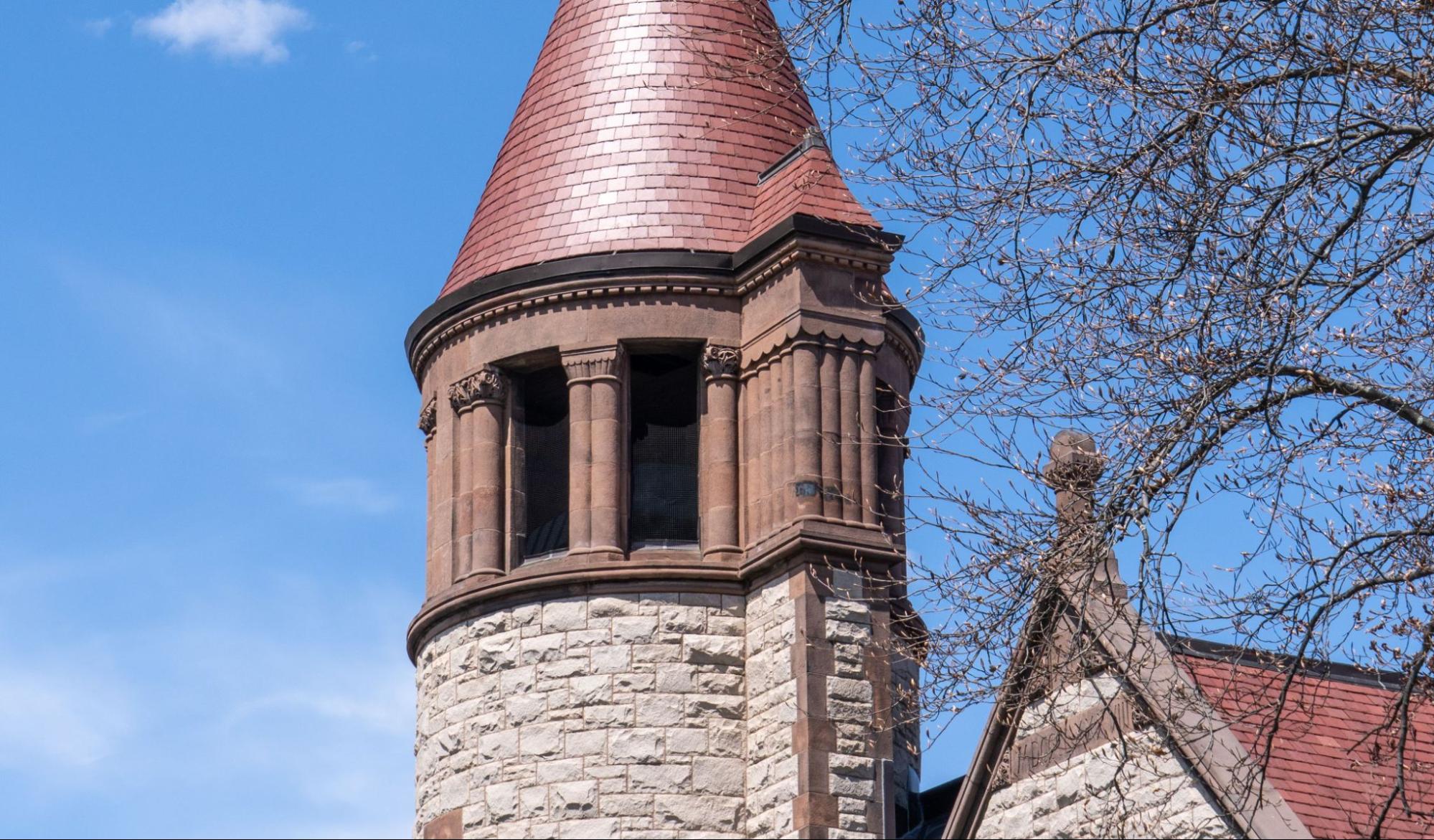
When Cambridge’s Ground Moves, the Masonry Shows It First
A hairline crack in the basement wall. A stone garden wall that’s begun to bow. A wavy stretch of brick walkway that used to lie flat. Cambridge homeowners run into problems like these, and none of it is unusual for a city this old.
Close to half of Cambridge’s homes were built before 1940, most of them going up between the 1860s and the 1920s: wood-frame Victorians and triple-deckers built for a fast-growing streetcar city, not brick rowhouses. On these houses, masonry does the structural work rather than the decorative work. It’s the foundation, the chimney, the granite or brick front steps, and the stone walls holding back a sloped yard.
Large parts of Cambridge are built on filled land, especially Cambridgeport and East Cambridge, where the marshes and tidal flats were filled in completely by the late 1800s. History Cambridge puts the figure near a third of the city, with urban fill the main soil type across most of it. Fill settles unevenly, and Greater Boston runs through roughly 30 to 50 freeze-thaw cycles a winter, working on top of that movement year after year. As a masonry contractor working across Cambridge, Three Hills sees foundation, chimney, and step problems that trace straight back to that ground.
Not Sure What’s Causing the Crack?
Get a straight read on your foundation, chimney, or steps before you decide anything.
Where Masonry Fits Into a Wood-Frame House
Brick, stone, block, and poured concrete count as masonry once they’re set and bonded with mortar. In a wood-frame house, though, that material only shows up in a few specific places: under the house, around the flue, and at the entry.
On a triple-decker or an older Victorian single-family, those masonry elements were often built along with the house and haven’t been touched since. Mortar softens with age, granite steps shift with the ground under them, and a chimney built on its own footing can settle at a different rate than the rest of the house. Figuring out which of those is happening, and how far along it is, comes before any repair starts.
Masonry Repairs We Handle in Cambridge
Cambridge homes rarely need just one fix. A settling foundation tends to pull at the chimney footing and the front steps at the same time, since all three are sitting in the same ground. Here’s how Three Hills breaks that work down:
- Foundation Repair: Cracked, bowing, or unevenly settled foundations get stabilized and repaired, matched to the age and material of the house.
- Chimney Repair & Restoration: Leaning chimneys, cracked crowns, and deteriorated brick get rebuilt or repointed so the chimney sheds water instead of holding it.
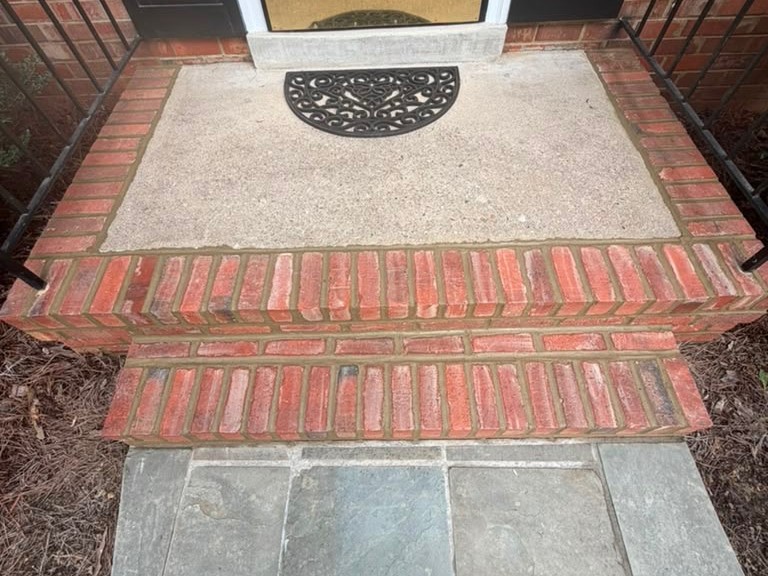
- Steps & Stairs: Granite, brick, or concrete steps that have pulled away from the house or settled unevenly get reset or rebuilt.
- Brick & Stone Repair: Brick and stone that are cracked, spalled, or coming loose on stoops, walls, or accents get pulled and rebuilt to blend with what’s already there.
- Retaining & Garden Walls: Stone or block walls holding back a sloped yard get rebuilt when they lean, bulge, or lose material.
- Paver Walkways: New or reset paver walkways built to handle the same ground movement as everything else on the property.
A Cambridge foundation, a chimney, or a set of steps all get the same treatment: figure out where the ground or the water is actually moving, then build the fix to outlast the next few winters.
Most structural masonry in Cambridge needs a building permit from Inspectional Services: foundation repair, a chimney rebuild, or a retaining wall over 4 feet tall measured from the bottom of the footing. We pull the permit as part of the job. Smaller like-for-like work, like repointing a section of joints, usually doesn’t need one.
Caught It Early? Good.
Small masonry problems stay small when someone looks at them in the right season.
How Do You Know When Your Cambridge Home Needs a Mason?
A house this age settles some, and that’s normal. The real question is whether it’s stopped moving or still in motion. These signs help answer that:
A Step Pulling Away From the Door
A gap opening between a stoop or step and the house usually means one has settled and the other hasn’t. Steps are typically built on their own small footing, separate from the house foundation, so they move at their own pace as the ground underneath compresses. A gap that keeps widening season to season is worth tracking before it turns into a trip hazard.
A Leaning or Cracking Chimney
A chimney tilting away from the roofline, or a crack where it meets the house, often means its footing is moving separately from the foundation underneath the rest of the house. Chimneys are usually built on an independent footing rather than tied into the main foundation, which is why they can lean while the rest of the house looks fine. A small tilt is easy to miss from the ground, but a widening gap at the roofline is a sign the movement hasn’t stopped.
A Stair-Step Crack in the Foundation
A crack that runs diagonally through a block or brick foundation, following the mortar joints, usually points to uneven settling below. That diagonal path through the joints, rather than straight through the brick or block itself, is what tells a mason it’s settlement rather than surface damage. A hairline version is common and often not urgent, but one wide enough to fit a coin, or one that’s grown since you last checked it, is worth a closer look.
Doors and Windows That Suddenly Stick
When a door or window that used to close fine starts sticking or won’t latch, the frame around it may be racking as the ground shifts underneath. This usually shows up gradually. A door that used to swing shut on its own might start needing a shove, or a window frame might go slightly out of square. It’s easy to blame on humidity or general old-house settling, but if it’s happening more on one side of the house than the others, the foundation underneath is worth checking.
Water Pooling Against the Foundation
Standing water or a damp basement wall after rain can mean the grading or the masonry around the foundation isn’t shedding water the way it used to. On a lot built over fill, drainage patterns can shift as the ground settles, so a yard that used to drain fine can start holding water right against the house. Left alone, that moisture works into the foundation mortar and adds to the movement already underway.
Any one of these is worth a look. A few together usually share a cause, and we’ll tell you which one after we see the house in person.
Why Cambridge Homeowners Choose Three Hills
Gerard Whelan owns Three Hills and runs the crew himself, on every job. That means the person who gives you the estimate is the same person setting the brick and mixing the mortar, not a name that disappears once the contract is signed.
Three Hills is a registered Home Improvement Contractor (HIC #219738), carrying workers’ comp and liability insurance, and backs its work with a 25-year guarantee. Masonry is the whole business here, not something added onto a landscaping or general contracting line. On a Cambridge foundation carrying a century of settling, that focus is what keeps a repair from needing to be redone in a few years.
What You Get in Writing
Every estimate is a written number, delivered after we’ve walked the property, with the scope spelled out before anything starts. No allowances that balloon later, no change orders you find out about on the invoice. The work is backed by a 25-year guarantee, and Gerard is on site for it.
Cross the Chimney Off Your List
A leaning stack or a cracked crown is a smaller job than what it turns into.
Masonry Work Across Cambridge and Greater Boston
Three Hills works on foundations, chimneys, and steps throughout Cambridge, from the triple-deckers and Victorians around Harvard Square, Central Square, Porter Square, and Inman Square to the older homes in Cambridgeport, East Cambridge, North Cambridge, and West Cambridge. The crew also covers the surrounding communities across the river, including Boston, Somerville, Charlestown, Chelsea, and Allston.
Don’t see your street or neighborhood listed? Get in touch anyway. There’s a good chance it’s already covered.
Cambridge Masonry Contractor FAQs
Do I need approval from the Cambridge Historical Commission for masonry work?
Yes, if your home sits in one of the city’s historic or conservation districts: Old Cambridge, Fort Washington, Harvard Square, Avon Hill, Half Crown-Marsh, or Mid Cambridge. Exterior masonry changes need a certificate from the Cambridge Historical Commission. Repairs done in kind are usually approved by staff on the spot, no hearing. We’ll tell you where your address stands.
How much does masonry repair cost in Cambridge?
Masonry pricing isn’t one-size-fits-all. A repointed chimney costs a lot less than resetting a set of granite steps or shoring up a section of foundation, and material, access, and how far the damage has spread all factor in. We give you a written number after walking the property, and that visit doesn’t cost anything.
How long does a masonry repair take?
Smaller jobs move fast. Repointing a chimney or resetting a step is often finished within a day or two. A foundation repair, a rebuilt retaining wall, or a full masonry restoration takes longer, generally one to two weeks, depending on how much needs to come apart before it goes back together.
Is there a best time of year for masonry work?
Mortar needs mild temperatures to cure. Below about 40 degrees, the masonry standard (TMS 602) calls for heated materials and covered work, because mortar barely gains strength once it gets that cold. That’s why most masonry work in Cambridge runs spring through fall, and why an open joint is cheaper to fix in September than in April.
Will I need a repair or a full rebuild?
A full rebuild is the exception, not the rule. Even a foundation crack or a chimney that’s started to lean is usually solved with targeted work: repointing, resetting a section, or rebuilding just the affected courses. Rebuilding an entire wall or foundation section only comes up when there isn’t enough sound material left to anchor a repair to.
Do I need approval from the Cambridge Historical Commission for masonry work?
Yes, if your home sits in one of the city’s historic or conservation districts: Old Cambridge, Fort Washington, Harvard Square, Avon Hill, Half Crown-Marsh, or Mid Cambridge. Exterior masonry changes need a certificate from the Cambridge Historical Commission. Repairs done in kind are usually approved by staff on the spot, no hearing. We’ll tell you where your address stands.
How much does masonry repair cost in Cambridge?
Masonry pricing isn’t one-size-fits-all. A repointed chimney costs a lot less than resetting a set of granite steps or shoring up a section of foundation, and material, access, and how far the damage has spread all factor in. We give you a written number after walking the property, and that visit doesn’t cost anything.
How long does a masonry repair take?
Smaller jobs move fast. Repointing a chimney or resetting a step is often finished within a day or two. A foundation repair, a rebuilt retaining wall, or a full masonry restoration takes longer, generally one to two weeks, depending on how much needs to come apart before it goes back together.
Is there a best time of year for masonry work?
Mortar needs mild temperatures to cure. Below about 40 degrees, the masonry standard (TMS 602) calls for heated materials and covered work, because mortar barely gains strength once it gets that cold. That’s why most masonry work in Cambridge runs spring through fall, and why an open joint is cheaper to fix in September than in April.
Will I need a repair or a full rebuild?
A full rebuild is the exception, not the rule. Even a foundation crack or a chimney that’s started to lean is usually solved with targeted work: repointing, resetting a section, or rebuilding just the affected courses. Rebuilding an entire wall or foundation section only comes up when there isn’t enough sound material left to anchor a repair to.
Talk to Us Before the Next Freeze
A stoop pulling away from the door. A chimney that’s started to lean. A crack that showed up this year and hasn’t stopped growing. Any one of those is reason enough to have someone look. We’ll walk the property, point out exactly what we’re seeing, and tell you plainly what it needs and what it costs. Reach out whenever you’re ready to have someone take a look.