Masonry Built for Charlestown’s Old Brick and Tight Lots
Maybe it’s your rowhouse wall near Monument Square, with mortar that’s gone soft and sandy. Or maybe it’s the wall you share with the house next door, with a crack creeping up toward the roofline.
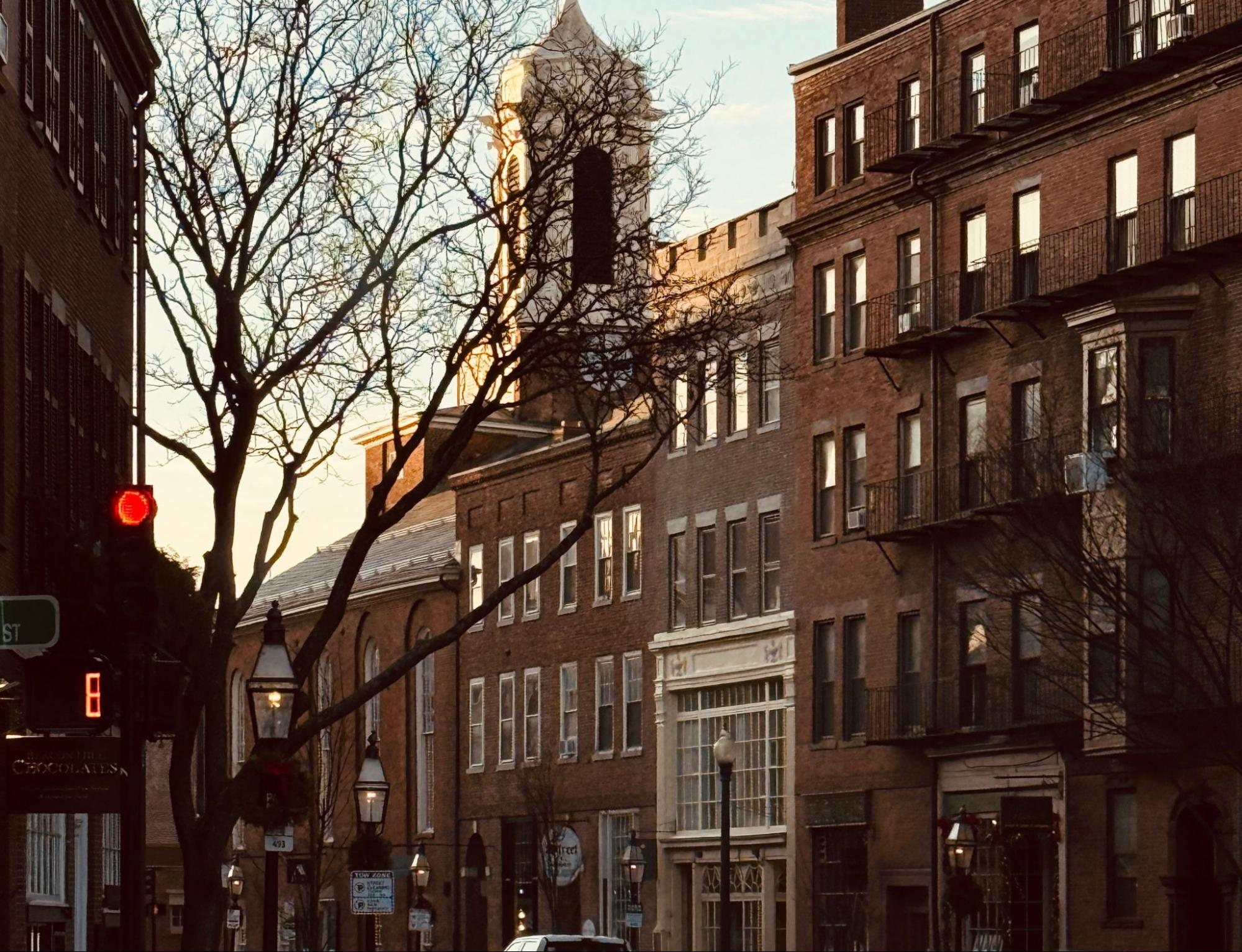
With the age of the housing stock in Charlestown, none of that is surprising. The town burned during the Battle of Bunker Hill in 1770s and got rebuilt from the ground up after, so most of the brick rowhouses standing today went up between the 1840s and the 1870s, with a handful of Federal-era houses from the decades before that. It’s one of the most intact stretches of 19th-century brick in Greater Boston. Add a century and a half of freeze-thaw winters on a peninsula where the waterfront and the neck sit on filled land, and brick and mortar wear down faster than anything you’d see in a newer house.
That’s where Three Hills Masonry & Foundations comes in. As a masonry contractor working in Charlestown, we see the same two issues regularly, the deterioration that comes with aging brick, and water that’s found a way in. Being this close to the water stacks the deck a few ways: wind-driven rain hits harbor-facing walls harder, salt in the air and road salt in winter both hold moisture against the brick, and down near the waterfront a high water table pulls damp up into the base of the wall. Your mortar joints and brick faces end up taking the worst of the cold and the wet at the same time.
That’s why we start by identifying exactly where moisture is getting in, then assessing the condition of your masonry to figure out what actually needs repair.
Not Sure What Your Brick Needs?
Get a straight read on what’s going on before you decide anything.
What a Masonry Contractor Actually Handles
Masonry is anything built from individual units, brick, stone, block, or concrete, set and bound with mortar. That runs from exterior walls and facades to chimneys, steps, and foundations, on both new construction and repair of what’s already standing.
Most masonry failures start with the same question: why is this wall giving out here and not somewhere else? Usually it’s mortar that’s washed out, brick that’s absorbed water and started to spall (flake and crumble from moisture trapped inside), or a base that’s settled unevenly under the weight above it. The right repair depends on the cause:
Repointing failed joints: Cutting out soft, sandy mortar and packing the joints with fresh mortar matched to the original.
Replacing spalled brick: Pulling the flaking, crumbling units and setting sound brick in their place.
Resetting a leaning section: Taking down what’s shifted and rebuilding it on a base corrected to carry the load.
Sealing the wall: Closing off the path water is using, so the repair holds through the next round of freeze-thaw.
If you live in a shared rowhouse, that diagnosis gets more specific. A wall tied into the house next door moves differently than a freestanding wall. An experienced mason can tell the difference between minor settling cracks and cracks that indicate a larger problem with the shared wall.
The Masonry Services Charlestown Homes Need Most
The masonry services Charlestown homes call for most fall into a handful of categories. Some rowhouses need just one, others need several together, since old brick, wet ground, and a shared wall tend to show the same kind of wear at the same time.
Brick & Stone Repair
Cracked, loose, or spalled brick and stone get cut out and reset or replaced, matched to the original so the wall reads as one piece. Brick repair on a Charlestown rowhouse is usually a handful of units at a time, not the whole face.
Repointing & Tuckpointing
Failed mortar joints cut out and packed with fresh, matched mortar before water works any further into the wall. Repointing, also called tuckpointing, is the most common masonry repair on old brick, and on a rowhouse this age it’s often the whole job.
Masonry Restoration
Historic masonry restoration brings older brick and stone back to sound condition without losing the original look, from Federal-era houses to the Greek Revival and Italianate rowhouses that make up most of Charlestown’s brick.
New Masonry Construction
New brick, stone, or block walls built to match an existing house or addition, including a new paver walkway leading up to the door.
Structural Wall Repairs
Leaning, bowing, or settling walls reset and reinforced, including shared walls between attached houses.
Historic Brick Matching
Replacement brick and mortar matched to a house’s original material, in color, size, and texture, so the repair disappears into the wall instead of reading as a patch. On brick this old, the mortar also has to be mixed softer than the brick itself. Modern Portland cement is harder and less permeable than century-old brick, so it traps water and pushes the damage into the brick faces around it, which is why a hard repoint on an old rowhouse often looks fine for two winters and then starts taking the wall apart.
Whichever one your house needs, the goal’s the same: get the water out, get the mortar back to solid, and leave the wall able to carry weight and shed water for another few decades.
Got a Project? Let’s Take a Look.
How Do You Know When Charlestown Brick Needs a Mason?
Some wear on old brick is normal. What matters is telling the difference between a wall that’s just aging and one that’s started to fail. A few signs make that call for you.
1. Mortar Turning to Sand
Joints crumble under a fingernail scrape, and water starts finding its way through the wall.
2. Spalling Brick
Brick faces flake, pit, or pop off in chunks, usually from moisture trapped inside freezing and expanding.
3. A Stair-Step Crack
A crack that follows the mortar joints in a diagonal pattern usually means the wall or foundation beneath it has moved.
4. Efflorescence
A white, chalky residue on brick or stone that means water is moving through the masonry and leaving mineral deposits behind as it evaporates.
5. A Gap Opening At a Shared Wall
Two attached houses settling at different rates is worth a look before it becomes a bigger question.
Any one of these is worth a look. Two or three together usually share a cause, and we’ll tell you which one you’re looking at after we see it in person.
Why Charlestown Homeowners Choose Three Hills
The same crew handles your project from the first estimate to the last day of work. No salesman who disappears once the contract’s signed, no subcontractor you’ve never met and won’t see again. The people repointing your wall are the same people who quoted it.
Three Hills is a registered Home Improvement Contractor (HIC #219738), with workers’ comp and liability coverage, and a 25-year guarantee behind every job. Masonry is the whole business here, not a service line bolted onto hardscaping or general contracting. On a 170-year-old rowhouse wall that’s carrying real load, that’s the difference between a repair that holds and a patch that looks fine until the next thaw.
If your house sits on or around Monument Square, the city is working toward making it a protected historic district, which would mean exterior masonry work needs a Certificate of Design Approval from the Boston Landmarks Commission before a permit gets issued. That’s not in force yet, but we work on historic brick either way, and we’ll tell you where your address stands before you plan the job.
Catch It Before It Becomes a Rebuild
Masonry Work Across Charlestown and Greater Boston
Three Hills works on rowhouses and homes throughout Charlestown, from the brick around Monument Square and the streets running down toward Main Street, to the converted yard buildings and newer condos along the Charlestown Navy Yard waterfront. We also serve the neighboring communities across the river and the harbor, including Boston, Cambridge, Somerville, and Chelsea.
Don’t see your street listed? Reach out anyway. There’s a good chance we cover it.
Charlestown Masonry Contractor FAQs
How much does masonry repair cost in Charlestown?
There’s no flat rate for masonry work. Cost depends on the size of the repair, the materials, and the condition of the wall itself, so the only honest number comes after we see the structure in person. The estimate is free.
How long does a masonry repair take in Charlestown?
Most repairs, like repointing a section of wall or resetting a few bricks, take a day or two. Larger jobs, like restoring a full facade or rebuilding a section, can run one to two weeks depending on scope and weather.
Is there a best time of year for masonry work?
Spring through fall is the working season, because fresh mortar needs mild temperatures to cure properly. That makes the first hard freeze the real deadline. An open joint or a cracked brick heading into a New England winter takes on water, freezes, and opens wider, so the same repair usually costs less in September than it does in April.
Will my wall need a full repair or a full rebuild?
Most masonry problems, even on an old Charlestown rowhouse, come down to a repair: repointing, a handful of replaced bricks, or resetting a section that’s shifted. A full rebuild only comes up when a wall has lost too much material or shifted too far to carry its own weight.
Do I need a masonry contractor or a general contractor?
For brick, stone, or mortar work, you want a masonry contractor. A general contractor will usually sub the work out or cover the problem with a finish, while a mason treats the wall as structure that has to carry weight and shed water. On century-old brick, that difference decides whether the repair holds.
How much does masonry repair cost in Charlestown?
There’s no flat rate for masonry work. Cost depends on the size of the repair, the materials, and the condition of the wall itself, so the only honest number comes after we see the structure in person. The estimate is free.
How long does a masonry repair take in Charlestown?
Most repairs, like repointing a section of wall or resetting a few bricks, take a day or two. Larger jobs, like restoring a full facade or rebuilding a section, can run one to two weeks depending on scope and weather.
Is there a best time of year for masonry work?
Spring through fall is the working season, because fresh mortar needs mild temperatures to cure properly. That makes the first hard freeze the real deadline. An open joint or a cracked brick heading into a New England winter takes on water, freezes, and opens wider, so the same repair usually costs less in September than it does in April.
Will my wall need a full repair or a full rebuild?
Most masonry problems, even on an old Charlestown rowhouse, come down to a repair: repointing, a handful of replaced bricks, or resetting a section that’s shifted. A full rebuild only comes up when a wall has lost too much material or shifted too far to carry its own weight.
Do I need a masonry contractor or a general contractor?
For brick, stone, or mortar work, you want a masonry contractor. A general contractor will usually sub the work out or cover the problem with a finish, while a mason treats the wall as structure that has to carry weight and shed water. On century-old brick, that difference decides whether the repair holds.
Tell Us About Your Project
If your brick or stone is showing wear, whether it’s a soft mortar joint, a stair-step crack, or a wall you’re not sure about, talk to us. We’ll come out, walk the wall with you, and give you a straight answer on what it needs and what it costs. Get in touch with us to set up a time that works.