

TL;DR
Fresh mortar needs temperatures above roughly 40°F while it sets, because water left in the joint can freeze before the mortar hardens and break its bond with the brick.
Below that line, outdoor masonry takes heated enclosures or insulated covers, and the soft lime mortar on older homes is the least forgiving.
Across most of Greater Boston, October is the last dependable month for exterior work, and a repair that misses it is usually better planned over the winter and built in spring.
The furnace kicked on for the first time this week, and the repair you’ve been putting off since summer suddenly has a deadline. Maybe it’s a cracked chimney crown (the concrete cap on top of the chimney) or the front step that rocks when you come in with groceries. Either way, the question on your mind is simple: is there still time to get it done right?
Masonry in cold weather comes down to mortar and how it behaves in the first few days after it goes into a joint. The answer depends on the forecast, the kind of mortar your house needs, and how much of the season is left.
Here’s what cold does to fresh mortar, the temperature lines masons work by, which repairs can sit through a winter, and how to time the ones that can’t.
Fresh Mortar Is Where Masonry in Cold Weather Goes Wrong
Mortar is a mix of sand, a binder (cement, lime, or both), and water. It hardens through curing, a slow chemical change that needs water in the joint and mild temperatures around it.
In Portland cement mortar, that change is called hydration: the cement reacts with the water and locks the sand in place. Hydration slows as the air cools and nearly stalls close to freezing. Meanwhile, the water still sitting in the joint can freeze. Water expands by about 9 percent as it turns to ice, and inside soft, unset mortar that push breaks the mix apart and loosens its grip on the brick or stone.
Frozen mortar can feel hard to the touch. That’s why the damage often stays hidden until the thaw, when the joint starts crumbling out.
Lime mortar is slower still. It cures by drying and gradually crystallizing as it draws carbon dioxide from the air, which takes far longer than cement. Many older Greater Boston homes were built with lime-rich mortar, and any repair has to match it, which is why matching mortar on old brick matters. That makes the oldest walls the most weather-sensitive to repair.
When Is It Too Cold for Mortar? Masonry Temperature Limits
For most mortar, 40°F is the working line. Below it, mortar sets so slowly it may freeze before it hardens. It needs to stay above that temperature for about 48 hours after the work is done.
That 48-hour window is the part homeowners tend to miss. A 55-degree afternoon followed by a 30-degree night is a poor day for exterior mortar, because the joint pointed at 2 p.m. spends its first night below freezing. The wall’s own temperature counts too. Shaded, north-facing brick that sat through a frosty night can stay colder than the air well into the day.
Here’s how those limits play out across the thermometer, based on federal and state masonry specifications.
| Temperature | What Fresh Mortar Does | What a Mason Does |
|---|---|---|
| Above 80°F | Sets too fast and loses water before it bonds well | Shade, misting, and working the wall away from direct sun |
| 40°F to 80°F | Cures normally | Standard methods and a steady forecast |
| 32°F to 40°F | Sets slowly and is at risk if the night dips below freezing | Warmed mortar, covers, and a close eye on overnight lows |
| 20°F to 32°F | Freezes without protection | Windbreaks plus covers or heat to keep new work above freezing for at least 16 hours |
| Below 20°F | Freezes quickly | A heated enclosure kept running for at least 24 hours after work stops |
Below 40°F, protecting the fresh work becomes part of the job itself.
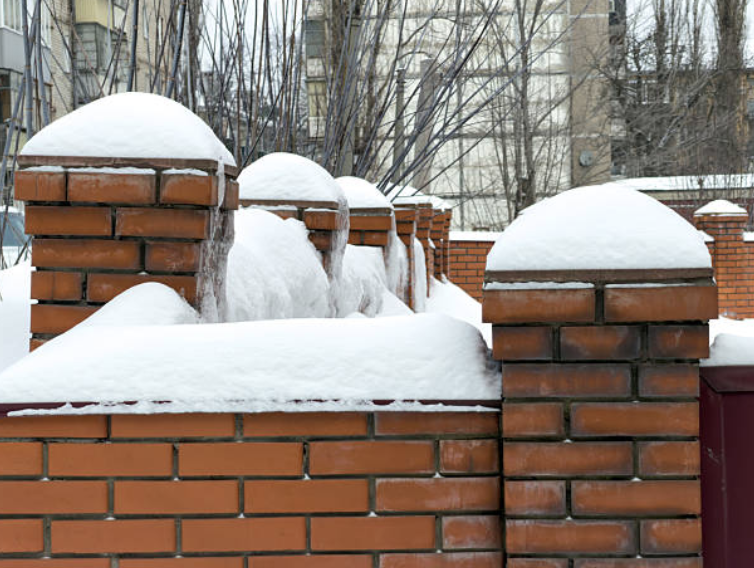
Can You Lay Brick in Winter?
You can, with cold weather masonry methods. Masons frame an enclosure with tarps, run heaters inside it, warm the sand and water before mixing, and keep the brick dry and unfrozen until it’s laid. Insulated blankets go over the finished work overnight.
Antifreeze is off the table. Masonry specifications prohibit lowering mortar’s freezing point with antifreeze or calcium chloride, since chlorides can corrode metal ties in the wall and leave efflorescence, the white, chalky staining that salts leave on brick.
The trade-off is cost. Framing, heat, and extra hours add up, and on a small repair, like a few feet of repointing (cutting out worn mortar and packing in fresh) or one loose step, the setup can rival the price of the repair itself. A larger job, or one where water is already coming through, can justify it. Whether heating a job makes sense is something we’ll tell you straight after seeing it.
Many Masonry Repairs Can Wait Until Spring
Whether a repair can wait comes down to one thing: whether water is getting into the masonry right now. A crack that fills with water before a freeze opens wider each time that water turns to ice, while a dry one usually comes through winter about the size it went in.
These are the repairs worth handling, or at least protecting, before the hard cold:
- Cracked Chimney Crown: A crack in the crown sends water straight into the brick, and if chimney repair has to wait, the crown can often be covered until spring.
- Loose Brick: Water freezing behind a brick that’s lost its bond pushes it farther out each time.
- Loose Tread: Frost working under a shifting tread widens the gap every month.
Worn joints that are still holding, a few bricks with spalling (faces that have flaked off), or a chimney due for repointing that isn’t taking on water are all reasonable candidates for a spring start.
Walkways are the clearest case for waiting. Pavers sit on a compacted gravel base, and frozen ground can’t be dug or compacted properly, so a paver walkway built in January sits on a base that moves in April.
Late Spring and Early Fall Are the Best Windows for Masonry Work
The best time of year for masonry work is any stretch when days and nights both stay inside that 40-to-80 range. Around Greater Boston, that usually means late spring and early fall.
The fall cutoff comes sooner than the calendar suggests. Boston’s average first frost falls around November 5, based on National Weather Service records going back to 1872. Mortar’s working line sits 8 degrees above freezing, though, so nights too cold for exterior work start before the first frost does. Towns farther from the harbor tend to cool off sooner than the city, which makes October the last dependable month across most of the service area.
A repair that misses the window can still move forward. Over the winter, the job can be scoped, priced, and any brick or stone can be sourced to match an older wall, so it’s ready to start once the nights stay above 40.
Cold Weather Masonry FAQs
Does rain affect fresh mortar the same way cold does?
Not quite, but rain is the other early risk. A heavy downpour can wash lime mortar out of fresh joints before it cures and smear it across the brick face. That’s why new work gets covered whenever rain is in the forecast, and why a wet week can push a start date the same way a cold one does.
Can basement or interior masonry be repaired in winter?
Often, yes. A heated basement stays above 40°F no matter the weather outside, so interior work on foundation walls and indoor chimney masonry isn’t tied to an outdoor calendar. The mortar and the space around it just need to stay warm while it cures.
Is poured concrete held to the same temperature rules as mortar?
Close to it. Poured concrete hardens through the same hydration reaction as cement mortar, and the American Concrete Institute’s cold weather guidance also centers on 40°F. Concrete steps or footings poured in the cold need blankets or heat, plus enough protected time before they can take a freeze.
How can I tell if a repair froze before it cured?
Check the new joints in spring. Mortar that froze early often flakes at the surface, rubs off as powder under your thumb, or pulls back from the edge of the brick. Any of those on work less than a year old means the joint never reached full strength and is worth having a mason look at.
Timing Your Masonry Repair Around the Weather
Most of a masonry repair’s risk sits in the first two days after the mortar goes in, which is why the forecast matters as much as the work. A joint or crack taking on water deserves attention before the freeze. One that’s holding steady can usually sit until the nights warm up again.
If you can’t tell which one you’ve got, reach out, and we’ll come take a look for free. Gerard and his crew will tell you whether it’s an October job, a spring job, or one to protect until then, with a written price before any mortar gets mixed.