
TL;DR
- Old brick is softer and more porous than modern brick, and the mortar around it is supposed to be softer still.
- Hard Portland cement mortar flips that. Stress and trapped moisture stop exiting through the joint and start exiting through the brick face instead.
- The result is spalling, brick faces flaking off, and New England freeze-thaw speeds it up every winter.
- Caught early, it’s repointing with matched mortar. Left alone, it’s cutting out and replacing brick.
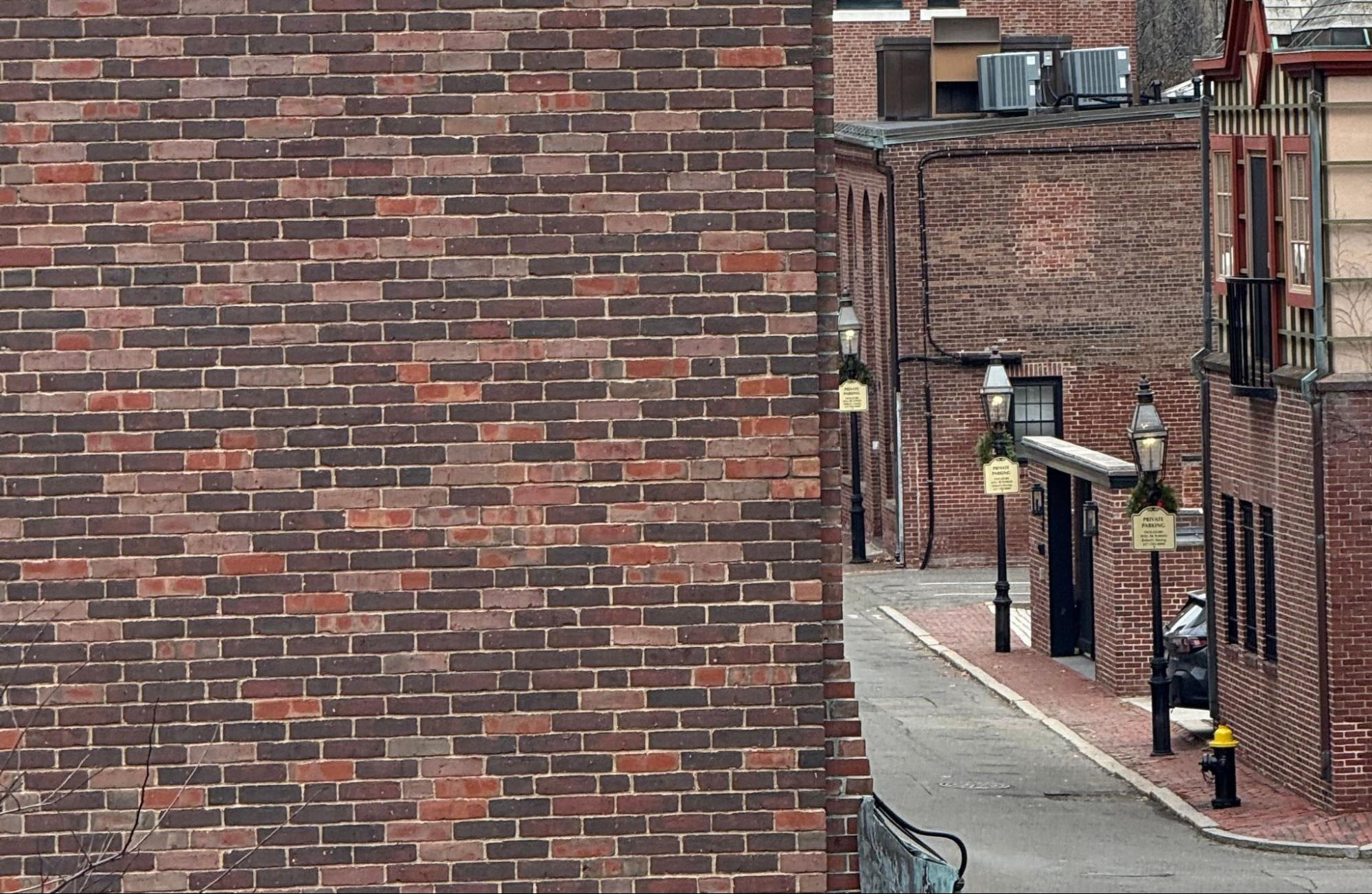
Brick faces flaking off in thin sheets. A gritty orange pile collecting at the base of the wall. Mortar joints that somehow look newer and sharper than the brick around them.
That last one isn’t a coincidence. On a lot of older Greater Boston homes, the brick started coming apart after the repointing, not before it. Repointing old brick, cutting out worn mortar and packing the joints with fresh, is one of the most common repairs on a century-old house. It’s also one of the easiest to get wrong, and when it goes wrong the damage takes years to surface.
You don’t need a mason to figure out which one is in your house. You need a key and five minutes.
Why Is Old Boston Brick Softer Than New Brick?
Brick made a century ago was fired in coal and wood kilns that could not hold a steady temperature, so it came out softer and more porous than the dense, consistent brick made today. Bricks stacked near the fire came out hard. Bricks stacked farther from it came out soft and pale orange, what masons still call salmon brick. Same clay, same batch, very different brick.
Masons sorted them by hand and put the soft ones where they would stay dry, tucked into the inner layer of a wall, with the hard-burned brick turned out to face the weather. Modern brick does not work this way. It leaves controlled kilns dense and uniform, which is exactly why mortar that suits a new build can be wrong on an old one.
None of this makes your brick defective. Soft brick has carried Greater Boston homes for well over a century, and there is a lot of it here: roughly half of Boston’s housing was built before 1940, compared with about one in eight homes nationwide. It just means your brick breathes and takes on water, and it needs mortar that works with it instead of against it.
Mortar Joints Are Built to Be the Weak Point
Mortar is supposed to be softer than the brick around it. The joint is the part that’s meant to give out first, which sounds backwards until you consider what a wall does all year. It takes on water, it dries, it expands in July and contracts in January, and something has to absorb all of that movement. On an old wall, the mortar absorbs it. Water travels through the joints and evaporates back out, and the small stresses of a house settling and shifting get taken up by the soft material between the bricks instead of by the bricks themselves.
“Mortar joints are intended to be sacrificial.”
National Park Service, Preservation Brief 2: Repointing Mortar Joints in Historic Masonry Buildings
That word does a lot of work. A joint is designed to wear out, and when it does a mason cuts it out and packs in fresh mortar. Brick is not designed to wear out. Once a brick face goes, no amount of mortar brings it back.
What Portland Cement Mortar Does to Soft Brick
Modern Portland cement mortar is hard, dense, and close to waterproof. On a new build with dense modern brick, that’s fine. On a century-old wall it flips the whole system around. Here’s what follows:
- The joint becomes the strongest, least breathable part of the wall
- Water still gets in, but can no longer escape through the joints
- It moves out through the face of the brick instead
- Winter freezes that trapped moisture inside the brick, and it expands
- The brick face lifts and flakes off in thin sheets, which is spalling
Greater Boston hands that process dozens of freeze and thaw swings every year, and road salt near steps and walkways speeds it along. The joint was supposed to take all of it. Now the brick takes it.
Which Mortar Belongs on Your House
The choice usually comes down to two families of mortar, and the difference between them is not quality. It’s whether the mortar is softer or harder than the brick it’s holding.
| High-Lime, Low-Strength Mortar | Portland-Heavy, High-Strength Mortar | |
|---|---|---|
| What it does | Stays soft and breathable, lets water pass through and evaporate, wears out before the brick does | Sets hard and close to waterproof, holds water in the wall, outlasts the brick around it |
| Where it belongs | Soft older brick, matched to the mortar already in the wall | New construction, below-grade work, and walls originally built with it |
The rule underneath the table is simpler than the table itself: the mortar going in should match what was already there, and it should always be softer than the brick. A mason can tell which one you have by scraping a joint, which is the same thing you can do yourself in about five minutes.
How to Tell What’s on Your House
You don’t need a mason to get a rough answer. Grab a house key, find a spot at the back of the house or somewhere out of sight, and look at four things.
- Scrape a joint with your key. Old lime mortar gives way and powders under moderate pressure. If the key skates across the joint and leaves nothing but a scratch, you’re looking at a hard cement-based mortar.
- Compare the joint to the brick beside it. Scrape both. If the brick gives up material more easily than the mortar does, the wall is upside down: the joint is now stronger than the thing it’s supposed to protect.
- Look for joints that are newer than the brick. Crisp gray mortar sitting flat and smooth against soft, weathered brick usually means a repointing job, and the color and texture mismatch is the clue that it wasn’t matched to the original.
- Check whether damage clusters around repaired sections. Brick faces flaking directly next to tidy joints, while an untouched stretch of the same wall sits fine, is the pattern that tells the story.
If a few of those line up, the repointing on your house was likely done with the wrong mortar. That’s worth knowing before anyone quotes you on it, because the fix depends entirely on how far it’s gone.
Caught Early It’s Repointing, Left Alone It’s Brick Replacement
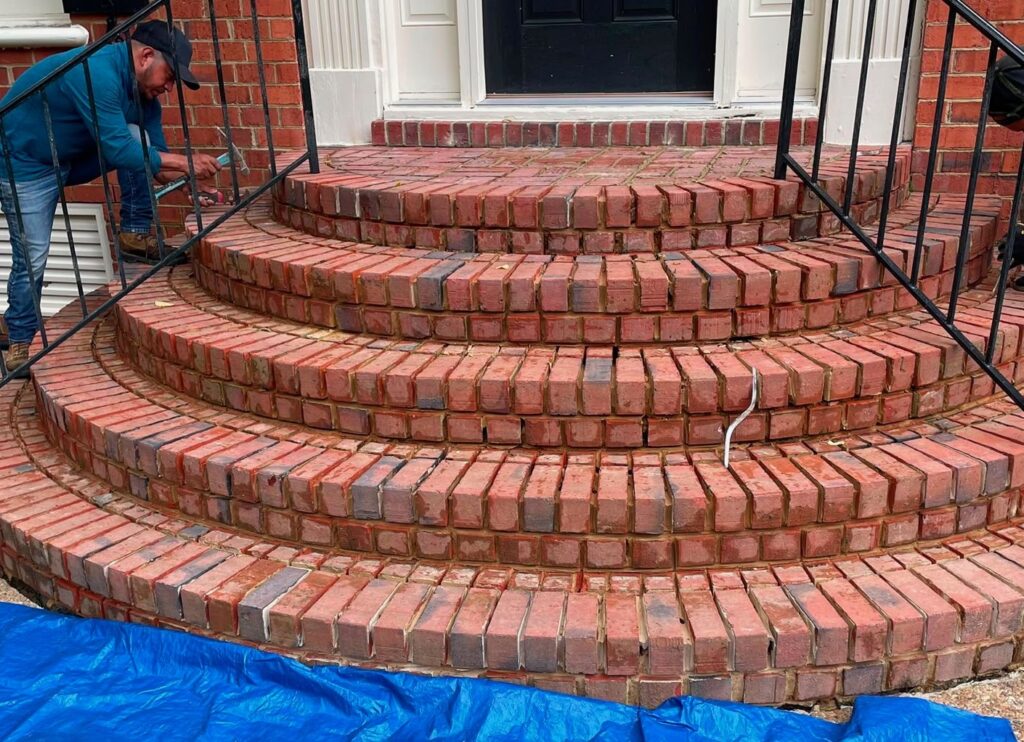
Wrong mortar in the joints is a fixable problem right up until the brick starts going. While the brick faces are still sound, the repair is repointing: cut out the hard mortar, pack the joints with a mix matched to the wall, and the wall goes back to shedding water the way it was built to. It’s ordinary masonry work, and it’s priced like it.
Once brick faces have spalled off, the math changes. A spalled brick can’t be patched with mortar, it has to be cut out and replaced, and replacements have to be sourced to match brick that hasn’t been made in a hundred years. Every winter that passes with hard joints on soft brick adds to that count.
Chimneys usually show it first. A chimney is the most exposed masonry on the house, taking weather from every side with no roof over it, so joints repointed with the wrong mortar surface there years before the same problem appears on a wall. If your brick is spalling at the roofline, chimney repair and restoration is the place to start looking.
Repointing Old Brick FAQs
How much does repointing old brick cost?
There’s no flat rate, and anyone quoting one over the phone is guessing. Cost depends on how much of the wall needs work, how high it is, how much hard mortar has to come out, and whether any brick needs replacing. The only honest number comes from someone looking at the actual wall, which is why the estimate is free.
Can I repoint old brick myself?
Small patches are within reach for a confident DIYer, but the two things that matter most are hard to get right without practice: matching the mortar mix to what’s already in the wall, and removing old mortar by hand without chipping the brick edges. Power grinders are the usual culprit there, and the damage they do to soft brick is permanent.
How do I know if my mortar was matched correctly?
Matched mortar disappears into the wall. If the joints read as a different color or texture than the rest of the house, or sit smooth and flat against weathered brick, they probably weren’t matched. Color alone isn’t proof, since mortar changes as it cures, but a mismatch worth noticing usually stays noticeable.
Does this apply to a newer brick house?
Mostly no. Brick made in the last several decades is dense and consistent, and standard modern mortar is a reasonable match for it. This is a problem specific to older, softer brick, which is common across Greater Boston given how much of the housing here predates 1940. If your house went up after the 1950s, the mortar under discussion is likely the right mortar.
How much does repointing old brick cost?
There’s no flat rate, and anyone quoting one over the phone is guessing. Cost depends on how much of the wall needs work, how high it is, how much hard mortar has to come out, and whether any brick needs replacing. The only honest number comes from someone looking at the actual wall, which is why the estimate is free.
Can I repoint old brick myself?
Small patches are within reach for a confident DIYer, but the two things that matter most are hard to get right without practice: matching the mortar mix to what’s already in the wall, and removing old mortar by hand without chipping the brick edges. Power grinders are the usual culprit there, and the damage they do to soft brick is permanent.
How do I know if my mortar was matched correctly?
Matched mortar disappears into the wall. If the joints read as a different color or texture than the rest of the house, or sit smooth and flat against weathered brick, they probably weren’t matched. Color alone isn’t proof, since mortar changes as it cures, but a mismatch worth noticing usually stays noticeable.
Does this apply to a newer brick house?
Mostly no. Brick made in the last several decades is dense and consistent, and standard modern mortar is a reasonable match for it. This is a problem specific to older, softer brick, which is common across Greater Boston given how much of the housing here predates 1940. If your house went up after the 1950s, the mortar under discussion is likely the right mortar.
Getting the Mortar Right the First Time
Old brick isn’t fragile, it’s just particular. It was made soft, it was built to breathe, and it holds up fine for another century as long as what goes between the bricks respects that. Most of the damage on older Greater Boston homes traces back to a repair, not to age.
If the joints on your house look newer than the brick and the brick has started flaking, it’s worth having someone look at it who works on old masonry specifically, not as a seasonal add-on. Three Hills Masonry & Foundations is owner-operated, and Gerard runs his own crew on every job, so the person reading your wall is the person doing the work. Get in touch and we’ll come out, tell you what we’re seeing, and give you a straight number. If your brick can wait a season, we’ll tell you that too.