
TL;DR
A damp, musty basement through the summer is usually condensation, not a leak: warm, humid air hitting cool foundation walls, easing off as fall air dries out. A real leak behaves differently, tracking from one spot, worsening after rain, and leaving staining or efflorescence, the white chalky residue water leaves in masonry. That difference decides whether you need a dehumidifier or a mason.
A musty smell that hits you at the bottom of the stairs. A faint film of moisture on the foundation wall. Cardboard boxes gone soft at the corners. Nothing flooded, nothing burst, and the walls looked fine all winter, so it’s easy to assume the foundation has started leaking.
Summer dampness in an older basement is usually condensation, not water coming through the wall. The stone and brick foundations under century-old Greater Boston homes are especially prone to it, and the fix is nothing like the fix for a leak. Fall is the easiest time of year to tell which one you have: condensation fades as the air dries out, and a leak doesn’t.
This post walks through what’s happening when a basement sweats, how to tell condensation from a real water leak, and when it’s worth having a mason take a look before winter.
Why Do Basements Get Damp in Summer?
Basement walls, especially old stone and masonry ones, stay cool well into summer. Deep soil holds close to 55 degrees year-round and barely moves between January and July, so the ground keeps your foundation at roughly that temperature no matter what the air outside is doing. It’s why the walls feel noticeably cooler than the rest of the house when you walk down there in July.
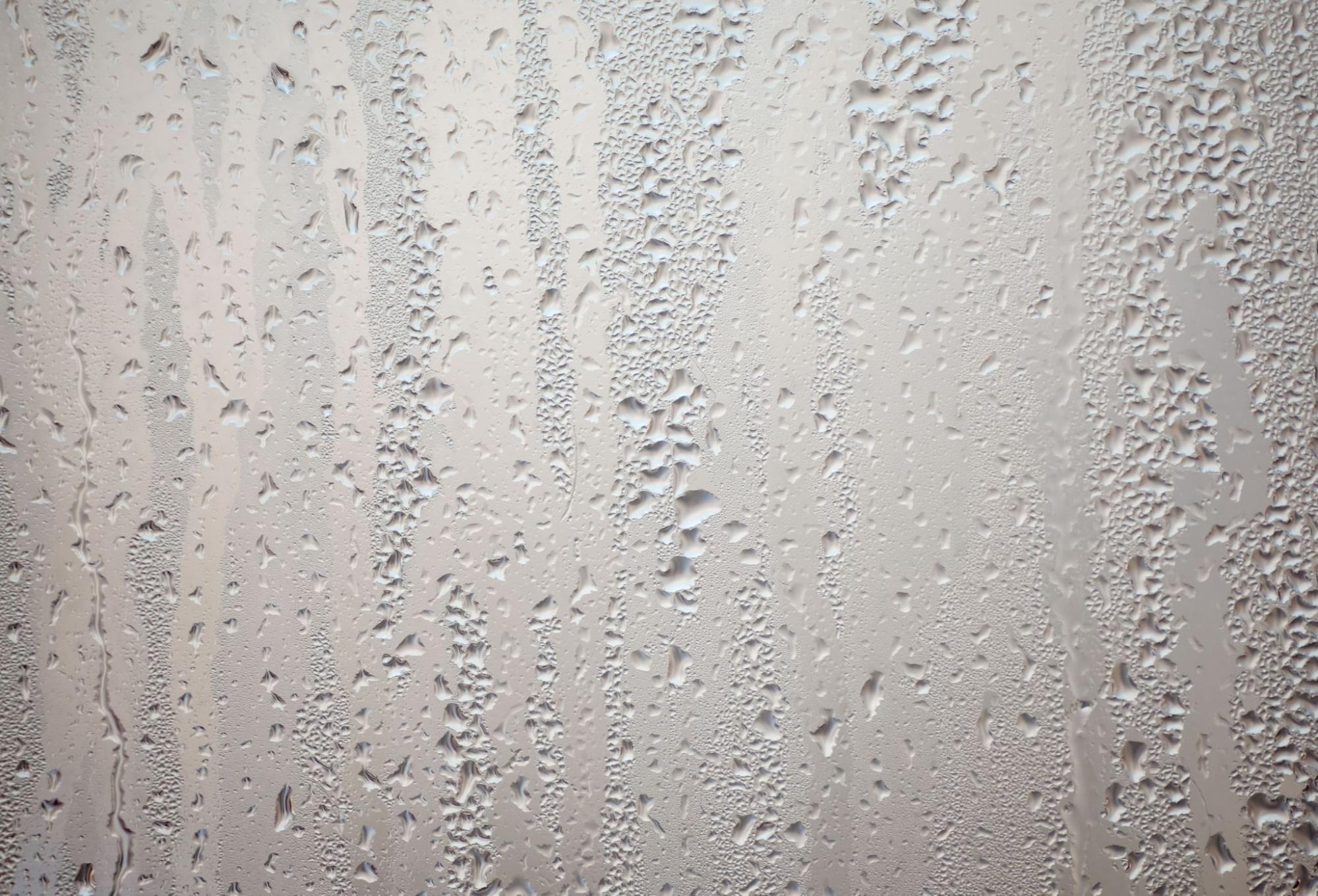
Warm outdoor air carries a lot of moisture here, and more than it used to. Dew points at Logan sit above 60 degrees for long stretches in July and August, and 65 and up has become common, which is the range where the air feels heavy the second you step outside. When that air gets into the basement, through an open window, a vent, or just normal air movement, it hits those cool walls and cools down fast. Air can’t hold as much moisture when it’s cold, so the extra has nowhere to go but onto the surface. That’s condensation, the same reason a cold drink sweats on a humid day or a bathroom mirror fogs after a hot shower.
Worth being clear about what that means: condensation is moisture coming out of the air inside your basement, not water coming through the wall from outside. Two different problems with two different fixes. Foundation waterproofing deals with water pushing in from the soil. A dehumidifier deals with air. Knowing which one you’re up against is the whole point of what follows.
This is why the timing matters so much. A foundation that’s been dry all winter and then turns damp the moment summer humidity sets in is telling you something specific: this is a seasonal, temperature-driven problem, not a structural one.
Is It Basement Condensation or a Water Leak?
The fastest way to tell condensation and a water leak apart is to pay attention to where the moisture shows up and what happens around it. Five signs separate them.
| Sign | Condensation | Water Leak |
|---|---|---|
| Where it shows up | Spread broadly across the wall, often on cold pipes and ductwork too | Starts at one point: a crack, a mortar joint, or the seam where wall meets floor |
| What it looks like | A thin, even film or beads of moisture | A track or stain moving outward or downward from that one point |
| When it’s worst | During humid stretches, building through the day | Within hours of rain, whatever the humidity is doing |
| What happens in dry weather | Eases up or disappears | Stays in the same spot |
| What it leaves behind | A damp wall that’s otherwise clean | Staining, or efflorescence, a chalky white crust left where water dried |
Each of those is worth understanding on its own, because a couple of them get misread often.
Condensation tends to cover a broad area. It shows up as a thin, even film across most of the wall, sometimes on cold water pipes or the underside of ductwork too. It builds during humid stretches and tends to ease up or disappear on a cooler, drier day, because the whole problem is tied to the air, not the ground outside.
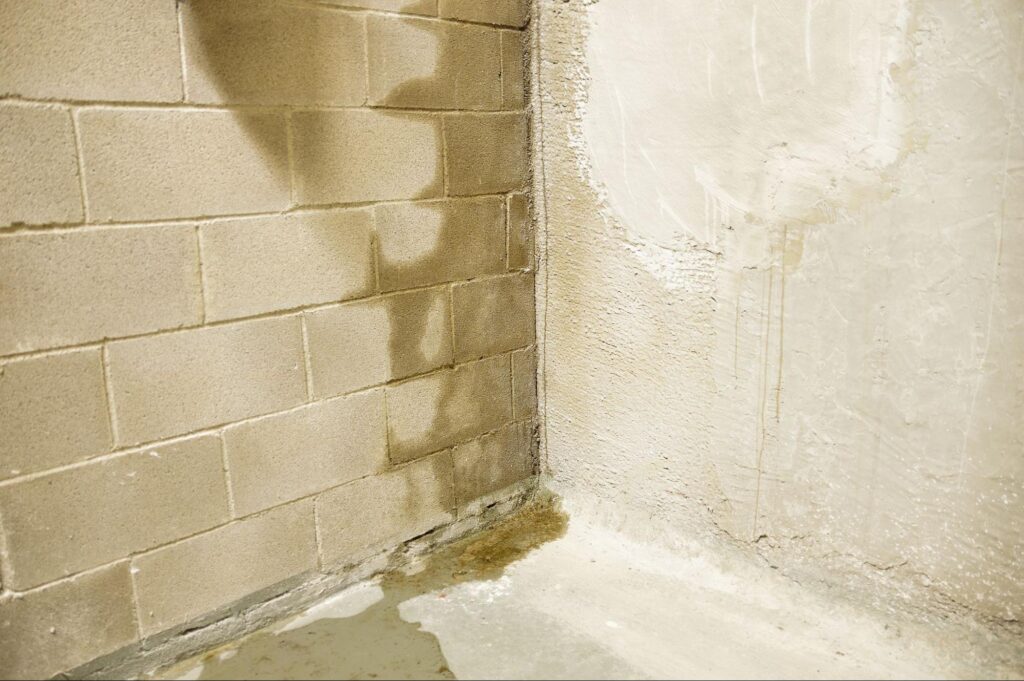
A real water leak tracks from one specific point, a crack, a mortar joint, a spot where the wall meets the floor, and moves outward or downward from there. It often appears or gets worse after rain, regardless of the outdoor humidity. And it doesn’t dry out on its own once you get a stretch of nice weather. If the damp keeps showing up in the same spot day after day no matter the weather outside, that’s a stronger signal you’re dealing with actual water getting in, not just condensing out of the air.
Staining is another sign. Condensation usually leaves the wall looking damp but otherwise clean. A leak, especially through old brick or stone, often leaves visible staining or efflorescence, the white, chalky mineral deposit left behind after water passes through masonry and evaporates. If you’re seeing that white residue, water has moved through the wall at some point, even if the wall feels dry when you check it.
A simple way to test it yourself: tape a small square of plastic sheeting or foil flat against the damp spot and leave it overnight. Moisture that collects on the outside of the plastic, facing the room, points to condensation. Moisture that shows up underneath it, against the wall, means water is coming through the masonry itself.
Does a Musty Basement Smell Mean I Have a Leak?
A musty basement smell gets blamed on leaks more than almost anything else, but smell alone doesn’t tell you the source. Any basement holding extra moisture in the air creates the damp, low-airflow conditions mold and mildew like, and it makes no difference whether that moisture came through a crack in the wall or condensed out of humid summer air onto cool stone and brick. The smell tells you moisture is present. It doesn’t tell you where it came from.
According to the EPA’s guidance on mold and moisture in the home, keeping indoor humidity below 60 percent is one of the most effective ways to prevent mold growth in the first place. A basement that runs humid all summer, even without a single crack in the wall, can hit those numbers easily.
When Should You Have a Mason Look at It?
A sweating basement wall usually isn’t urgent. A dehumidifier, closed windows during the humid stretches, and air that can actually move through the space handle a lot of condensation on their own. What matters more is what comes next. As fall air dries out, condensation should be fading, and anything still damp in October is worth a closer look before the cold sets in.
A few signs are worth having a mason look at, though:
Water Tracking From One Specific Spot
A crack or joint that’s damp every time, no matter the humidity, is a different problem than a wall that sweats evenly. If you can point to the exact place it starts, water is finding a way in right there, and that’s a repair job, not a ventilation one.
Staining or Efflorescence That Keeps Coming Back
Even if the wall dries out between rains, recurring white deposits mean water has been moving through the masonry. A one-time patch of efflorescence might be left over from an old issue, but deposits that keep showing up in the same spot point to an active entry point.
Damp That Shows Up Right After It Rains
If the pattern tracks with rain rather than humidity, you’re looking at seepage, water working its way through the wall from outside. Watch it across two or three storms. Condensation builds slowly as the day gets muggier, while seepage shows up within hours of the rain and then stays put. Fall storms make this easier to read now that humid air isn’t muddying the picture.
A Musty Smell That Doesn’t Let Up Once the Weather Cools
Condensation is seasonal, so the smell and the damp film should both ease off once fall brings cooler, drier air. If they’re still there in October and November, the moisture isn’t coming out of the air. Something is bringing it through the wall.
Fall is the right time to find out which. Water sitting in a mortar joint through a New England winter freezes, expands, and works the joint wider every cycle. Repointing that joint, raking out the soft mortar and packing the gap with fresh, costs less in October than rebuilding a section of wall in April.
Why a Mason, and Not Just a Waterproofing System
Worth saying why a mason, and not a company that only sells one system. Water getting through an old foundation is a masonry problem before it’s a drainage problem: mortar joints gone soft and sandy, a stone that’s shifted off its bed, brick that’s lost its face. We start at the wall itself and work outward to the grading and the gutters, because coating the inside of a joint that’s failing doesn’t stop the water. It just changes where it shows up.
None of these automatically mean a major repair. On a lot of older Greater Boston homes, the answer is basement waterproofing or better drainage around the outside, not work on the foundation itself.
Questions Homeowners Ask About Damp Basements
Does a dehumidifier actually fix a damp basement, or just cover it up?
For condensation, a dehumidifier addresses the real cause, since the moisture is coming from humid air rather than a leak in the wall. It won’t help if water is actually getting in from outside. If the basement stays damp even with a dehumidifier running consistently, that’s a sign to have the wall itself checked.
Can efflorescence show up without an active leak?
Yes. Those white deposits are salt the water carried out of the masonry and left behind as it dried, and they stay until something scrubs them off. You can find efflorescence on a wall that’s bone dry today. It tells you water moved through at some point, not that it’s moving now. Point it out at an inspection, because where it sits shows where the water got in.
My basement dried out on its own once the weather cooled. Do I still need to do anything?
If the damp and the smell both cleared as the air dried out, that points to condensation, so the fix is humidity, not the wall. Two things before winter. Keep the dehumidifier running until the basement holds below 60 percent, and while the wall is dry, look over the mortar joints and the seam where wall meets floor. Dry masonry shows cracks far more clearly than wet masonry does.
Is a damp basement a sign my foundation is failing?
Not usually. Most summer basement dampness in Greater Boston homes is condensation, which is a moisture and ventilation issue, not a structural one. Foundation problems tend to come with other signs, like cracking, shifting, or water that tracks from one specific spot regardless of the weather.
If you’re seeing any of those, that’s the point where foundation repair is worth asking about.
Does a dehumidifier actually fix a damp basement, or just cover it up?
For condensation, a dehumidifier addresses the real cause, since the moisture is coming from humid air rather than a leak in the wall. It won’t help if water is actually getting in from outside. If the basement stays damp even with a dehumidifier running consistently, that’s a sign to have the wall itself checked.
Can efflorescence show up without an active leak?
Yes. Those white deposits are salt the water carried out of the masonry and left behind as it dried, and they stay until something scrubs them off. You can find efflorescence on a wall that’s bone dry today. It tells you water moved through at some point, not that it’s moving now. Point it out at an inspection, because where it sits shows where the water got in.
My basement dried out on its own once the weather cooled. Do I still need to do anything?
If the damp and the smell both cleared as the air dried out, that points to condensation, so the fix is humidity, not the wall. Two things before winter. Keep the dehumidifier running until the basement holds below 60 percent, and while the wall is dry, look over the mortar joints and the seam where wall meets floor. Dry masonry shows cracks far more clearly than wet masonry does.
Is a damp basement a sign my foundation is failing?
Not usually. Most summer basement dampness in Greater Boston homes is condensation, which is a moisture and ventilation issue, not a structural one. Foundation problems tend to come with other signs, like cracking, shifting, or water that tracks from one specific spot regardless of the weather.
If you’re seeing any of those, that’s the point where foundation repair is worth asking about.
Getting a Straight Answer on Your Basement
A damp basement doesn’t automatically mean bad news. Most of the time it’s condensation, and a dehumidifier plus some airflow handles it. The times worth a second look are when the moisture tracks to one spot, keeps leaving white mineral deposits behind, or follows the rain instead of the humidity.
Fall is the useful window for all of this. The air is drying out, so anything still damp is telling you something, and there’s time to deal with a mortar joint or a drainage problem before the first freeze.
If you’re not sure which one you’re looking at, that’s a reasonable thing to be unsure about, and it’s what a free on-site inspection is for. We come out, find where the water is actually getting in, and give you a straight answer, including when the honest answer is a dehumidifier and no work at all. If it does turn out to be basement waterproofing, you get a written price you approve before we start, and the same crew from the first look to the last cleanup.