TL;DR
Most chimneys need one inspection a year. That’s the national fire safety standard, NFPA 211, and it holds whether the fireplace burns every weekend or hasn’t been lit in a decade. If you’ve never had your chimney inspected, you’re not behind, you’re just due. Fall is a practical time to book it, so anything that turns up gets fixed before a winter of freezing and thawing works on it.
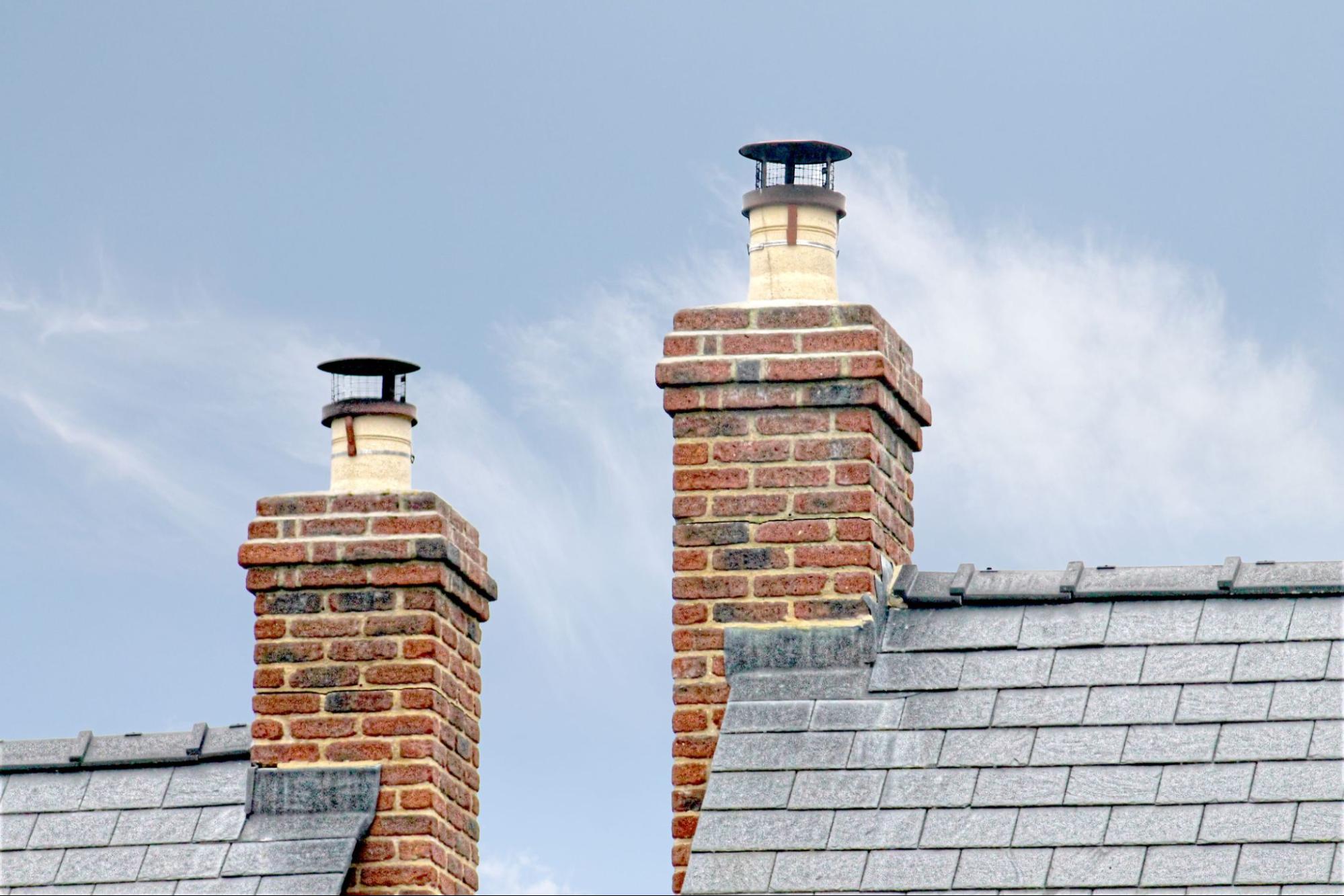
Most homeowners can tell you when the furnace was last serviced. Almost nobody can say the same about the chimney standing right next to it. It sits up past the roofline, out of sight, until a brown ring shows up on the bedroom ceiling, a chunk of brick lands in the gutter, or the joints start shedding sand down the side of the house. By then, the question isn’t how often a chimney should be inspected, but how long this has been going on.
That’s a normal place to be. Plenty of the older homes we work on across Greater Boston have chimneys nobody has checked in years. Sometimes, the last inspection was before the current owner bought the house. This post answers the inspection question first, then covers what fall specifically does to chimney masonry.
How Often Should a Chimney Be Inspected?
Once a year. NFPA 211, the national standard for chimneys, fireplaces, and vents, calls for a chimney to be inspected at least once a year, and that holds no matter how much the chimney gets used. It’s a consensus standard rather than a law, binding only where a town adopts it into code, but it’s the benchmark the whole trade works from. The Chimney Safety Institute of America follows the same standard and applies it to gas, oil, and wood systems alike.
That annual inspection is supposed to cover two things, and most homeowners only ever hear about one. The flue side is creosote and blockages, the fire and carbon monoxide risk, and that’s what a chimney sweep is looking at. The structural side is the crown, the flashing, the mortar joints, and the brick, the parts that keep water out and the stack standing. A standard annual inspection does take in the outside of the chimney, but how closely depends on who’s holding the clipboard and how far up they’re willing to go. A clean flue and sound brickwork are two different findings, and a house can have one without the other.
If your chimney has only ever been swept, or never touched at all, you’ve got plenty of company. It’s one of the most common gaps we find on older Greater Boston homes, and it’s an easy one to close.
Inspecting and Cleaning Aren’t the Same Job
Homeowners use the two words interchangeably, and they don’t mean the same thing. The inspection is the constant: once a year, whether you burn or not. Cleaning depends entirely on use. A fireplace that runs most weekends through the winter builds creosote and needs sweeping on a schedule. One that hasn’t been lit in five years may never need it.
The chimney that gets skipped most often is the one nobody thinks of as a chimney. If your furnace or water heater vents through a masonry flue, that flue is still carrying combustion gases, and it still falls under the same annual standard. It’s also the one most likely to have gone untouched since the house changed hands.
What the Three Inspection Levels Mean
If you call a sweep, you’ll hear the job described as a level, and the number decides how far anyone actually looks.
Level 1 is the standard annual visit. Someone checks what’s readily accessible, the flue from below and the outside of the chimney, without a camera or a trip onto the roof.
Level 2 adds a video scan of the flue interior. It’s required when a house sells, after a chimney fire, or when you change the appliance or the fuel it burns.
Level 3 means opening something up, taking apart part of the chimney or the structure around it to reach damage nobody can see.
Most homeowners only ever need a Level 1 unless something changes. The gap worth knowing about is that a Level 1 covers the outside of the chimney from wherever the inspector can safely stand, which is not the same as a mason reading the crown and joints up close.
Why Fall Is When Chimney Masonry Takes the Hit
Fall itself isn’t harder on your chimney than July was. What changes is what’s coming. New England winters run dozens of freeze and thaw cycles between November and March, which is why the Massachusetts Department of Fire Services points homeowners toward a chimney and flue check before the heating season starts. Nothing on the house is standing out in more of it than the chimney, up past the roofline with weather coming at it from four sides and above. Any weak point in the masonry gets worked on all winter long.
A chimney sheds water two ways. The crown is the concrete cap on top, and the flashing is the metal strip sealing the seam where the chimney meets the roof. Once either one cracks or pulls loose, rain gets into the brick and mortar underneath. That water sits in the masonry, and the first cold snap freezes it, expands it, and pops the face off the brick. Masons call this spalling. Once a brick spalls, it keeps spalling every winter after, because there’s no face left to protect it.
None of this happens on day one of a hard freeze. It builds gradually, one cycle at a time. That’s why a fall inspection catches things a winter one doesn’t. A cracked chimney crown found in October is a sealing job. The same crack found in March, after four months of freezing and thawing, is often a repointing job or a few replaced bricks.
What a Masonry Inspection Actually Checks
A masonry inspection isn’t a glance from the ground. It’s a close look at the parts of the chimney that determine whether it sheds water or holds onto it.
The Crown
The crown is the sloped concrete cap on top of the chimney, and it’s built to shed rain instead of holding it. During an inspection, we check it for hairline cracks, chipped edges, and any spot where water pools instead of running off. A crown that’s cracked, even slightly, sends rain straight down into the brick and mortar below it. This is often where chimney damage actually starts.
The Flashing
Flashing, the metal strip sealing the gap where the chimney meets the roof, is behind more chimney leaks than anything else on the stack. A chimney flashing leak here doesn’t announce itself. We check it for gaps, rust, and edges that have lifted away from the roofline over time. A flashing leak rarely shows up as water on the roof. It shows up as a stain on the ceiling near the chimney, well after the water found its way in.
The Mortar Joints
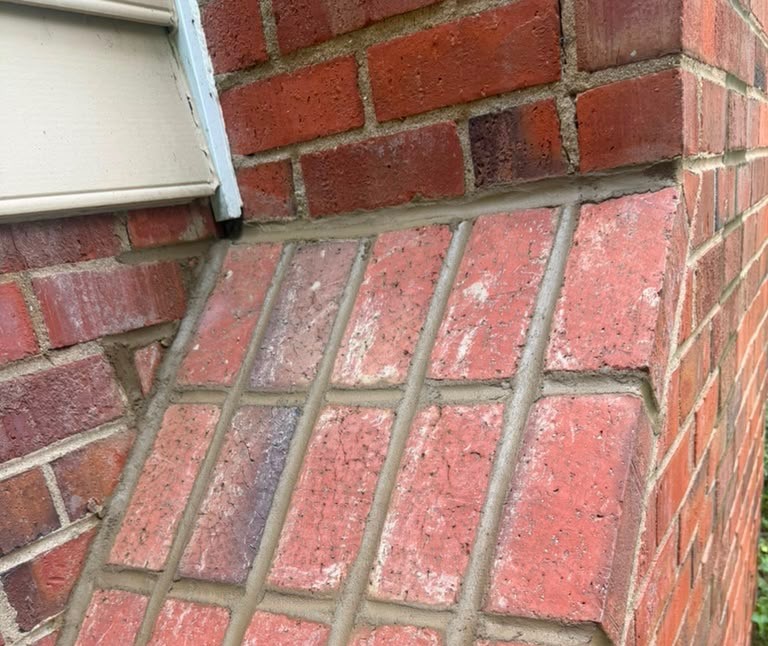
Mortar joints hold the brick together, and they’re built to wear out before the brick does. We check for joints that have turned crumbly, sandy, or washed out, since that’s the point where water starts moving straight through the wall instead of running off it. Caught at this stage, it’s a repointing job, cutting out the failed mortar and packing the joints with fresh, matched mortar, not a brick job.
The Brick
Brick gets checked row by row for spalling, cracking, and any brick that’s started to shift out of line. Spalling chimney brick shows up as the outer face flaking or popping off, usually from water that froze inside it during a past winter. Once a brick has spalled, there’s no face left to protect, so it gets replaced rather than patched. On an older chimney, that means sourcing brick that matches what hasn’t been made in decades.
The table below breaks down how the two kinds of chimney inspection differ, since homeowners often assume one covers the other.
| What You’re Comparing | Chimney Sweep Inspection | Masonry Inspection |
|---|---|---|
| Focus | Flue, creosote, and blockages | Crown, flashing, mortar, and brick |
| Catches | Fire and carbon monoxide hazards | Water intrusion and structural wear |
| Typical Provider | Certified chimney sweep | Mason |
| How often | At least once a year (NFPA 211) | Yearly on older masonry, or whenever an inspection flags the crown, flashing, or joints |
Most chimneys need both over time, and neither one substitutes for the other. A flue can be perfectly clean while the crown above it is letting water into the brick, and a mason checking the structure isn’t looking at creosote buildup inside the flue.
Chimney Inspection FAQs
What happens if the inspection turns up a problem?
You get a clear, written price for exactly what it needs, whether that’s sealing a crown, repointing a few joints, or something bigger. Three Hills is a registered, insured Home Improvement Contractor (HIC #219738), and the work carries a 25-year guarantee. Nothing starts until you approve it, and if the honest answer is that it can wait a season, we’ll tell you that too.
Does homeowners insurance require an annual chimney inspection?
It depends on the carrier. A homeowners policy isn’t a maintenance contract, and the National Association of Insurance Commissioners is direct that keeping the flue clean is the homeowner’s job. Some carriers ask for an inspection before writing or renewing on a home with a wood-burning fireplace. Damage traced to neglect can be excluded, so keep your records.
Can I inspect my own chimney, or does it need to be a professional?
You can spot obvious problems from the ground, like a visibly cracked crown or brick flaking onto the roof. What you can’t catch from down there is the early stuff: hairline cracks, flashing that’s lifted a quarter inch, joints just starting to go. Someone who does this for a living can get up there safely and knows what a sound crown or joint actually looks like.
How much does a chimney inspection cost?
Ours is free, so the honest answer for a Three Hills look is nothing. Across the market a routine Level 1 inspection generally runs $100 to $450 depending on access and what’s included. What varies far more than the inspection is the repair behind it, and you won’t get a real number on that from anyone who hasn’t been up there.
Does a gas fireplace or furnace flue need inspecting too?
Yes, and these are the ones that get skipped. The annual standard covers gas and oil systems the same as wood. No fire means no creosote, but the crown, flashing, and mortar joints weather exactly the same, and a masonry flue venting a furnace still has to shed water and stay sound.
How long does a chimney masonry inspection take?
In our experience a masonry inspection runs 30 to 45 minutes, covering the crown, flashing, mortar, and brick from the roofline down. You’ll get a straight answer on what we found before we leave, not a callback a few days later.
What happens if the inspection turns up a problem?
You get a clear, written price for exactly what it needs, whether that’s sealing a crown, repointing a few joints, or something bigger. Three Hills is a registered, insured Home Improvement Contractor (HIC #219738), and the work carries a 25-year guarantee. Nothing starts until you approve it, and if the honest answer is that it can wait a season, we’ll tell you that too.
Does homeowners insurance require an annual chimney inspection?
It depends on the carrier. A homeowners policy isn’t a maintenance contract, and the National Association of Insurance Commissioners is direct that keeping the flue clean is the homeowner’s job. Some carriers ask for an inspection before writing or renewing on a home with a wood-burning fireplace. Damage traced to neglect can be excluded, so keep your records.
Can I inspect my own chimney, or does it need to be a professional?
You can spot obvious problems from the ground, like a visibly cracked crown or brick flaking onto the roof. What you can’t catch from down there is the early stuff: hairline cracks, flashing that’s lifted a quarter inch, joints just starting to go. Someone who does this for a living can get up there safely and knows what a sound crown or joint actually looks like.
How much does a chimney inspection cost?
Ours is free, so the honest answer for a Three Hills look is nothing. Across the market a routine Level 1 inspection generally runs $100 to $450 depending on access and what’s included. What varies far more than the inspection is the repair behind it, and you won’t get a real number on that from anyone who hasn’t been up there.
Does a gas fireplace or furnace flue need inspecting too?
Yes, and these are the ones that get skipped. The annual standard covers gas and oil systems the same as wood. No fire means no creosote, but the crown, flashing, and mortar joints weather exactly the same, and a masonry flue venting a furnace still has to shed water and stay sound.
How long does a chimney masonry inspection take?
In our experience a masonry inspection runs 30 to 45 minutes, covering the crown, flashing, mortar, and brick from the roofline down. You’ll get a straight answer on what we found before we leave, not a callback a few days later.
Know Where Your Chimney Stands Before Winter
An annual chimney inspection isn’t about catching a disaster. Most years, it confirms the crown is holding, the flashing is tight, and the mortar has another season in it. The years it doesn’t, catching the problem in fall instead of spring is usually the difference between resealing a crack and repointing a section of brick.
If you can’t remember the last time anyone looked at your chimney, or you’re not sure it’s ever happened, that’s exactly what a free inspection is for. Gerard runs his own crew on every job, so the person on your roof is the person pricing the work. Send us a message and you’ll know where your chimney stands, including whether it can wait until spring.